在2007年丁亥年運程預測文中,小弟特別強調溝通。
因為丁為火而亥為水,丁亥年屬水火相沖、以下犯上的年份。水火相沖,能以水生木、木生火,便能溝通衝突雙方,達致水火既濟的局面。而亥中藏壬甲,甲屬木,代表溝通有門,而壬丁又合木,衹要願意溝通,便能達到上和下睦的結果。
所以,丁亥年是好的年份!
然而,在戊子年,上層對下層施加強大壓力,造成有冤無路訴,溝通無門的局面。
戊屬土而子屬水,土剋水,以上壓下,需要土生金、金生水作為溝通橋樑。但子宮藏癸水,欠金,結果就是溝通無門了。流年欠金,金命人當時得令,成為衝突雙方化解紛爭的重要橋樑。
戊子年春夏季均火熱,命中多辰土和丑土人士,亦是當時得令。屬牛、屬龍,或是金命人又命帶辰土和丑土的人士,均是戊子年的寵兒,排難解紛的高手。
大家緊記,戊子年上半年,必須靠辰土、丑土這些濕土散熱,然後靠金救命。
命格火熱的人士,宜多帶金飾,其中又以牛和龍的金飾吊墜最有效。
Wednesday, March 26, 2008

2008年戊子年運程預測 : 大桃花年
子、午、卯、酉為四桃花,故戊子年屬大桃花年。
是年一切桃色新聞、名人明星緋聞等等,均會受到社會人士廣泛關注。
戊子年又是鼠輩橫行、盜賊如毛的年份,色情罪案、風化案多不勝數。包二奶等等新聞聞,在戊子年成為司空見慣的事情。
網誌標籤:2008年戊子年運程預測, 鼠年行大運, +二生肖運程
是年一切桃色新聞、名人明星緋聞等等,均會受到社會人士廣泛關注。
戊子年又是鼠輩橫行、盜賊如毛的年份,色情罪案、風化案多不勝數。包二奶等等新聞聞,在戊子年成為司空見慣的事情。
網誌標籤:2008年戊子年運程預測, 鼠年行大運, +二生肖運程
2008年戊子年運程預測 : 戊子年立春日八字(6)
2008年戊子年是經濟大豐收的一年,但一切好景,都在下半年。
還有一點值得一提,戊子年金為用神,但立春八字則不見金的踪影,衹在戌土內藏了一點立金。
辛金入庫,乃是醫療失誤、杏林醜聞的訊號。亦是疫症橫行、醫生疲於奔命的訊息。
網誌標籤:2008年戊子年運程預測, 鼠年行大運, +二生肖運程
還有一點值得一提,戊子年金為用神,但立春八字則不見金的踪影,衹在戌土內藏了一點立金。
辛金入庫,乃是醫療失誤、杏林醜聞的訊號。亦是疫症橫行、醫生疲於奔命的訊息。
網誌標籤:2008年戊子年運程預測, 鼠年行大運, +二生肖運程
2008年戊子年運程預測 : 戊子年立春日八字(5)
正月 甲寅月甲木過盛過促,一切事情容易發生巨變。
二月 乙卯月甲木過盛再逢乙木,一切事情容易暴敗!卯又與八字內的戌合化火局,把財星合走,股市樓市受壓。卯戌合火又代表把隱藏的病毒釋放出來,危險!雖云乙卯月危機重重,但港股直通車在此時應有眉目,港股醖釀上升趨勢。
三月 丙辰月在惡劣的上半年,這最好的月份了。這是經濟回穩,樓市股市復甦的月份。
四月 丁已月火過旺,股市瘋狂上升,樓市則恐成焦土。
五月 戊午月仍然是火旺的月份,股市繼續升温,房地產則未見好情況。
六月 己未月股市狂升大爆的月份。因為仍然是熱土的月份,樓市仍然未見好!
七月 庚申月「貴亦重金,庚金來剋。」這是全年最好的月份。申內藏庚金、戊土、壬水。既有濕土,又有金水,樓股齊鳴!樓市股市暢旺,好到不得了。
八月 辛酉月這個月經濟持續向好,樓市股市蓬勃發展。終於見辛金,醫生可鬆一口氣了。
九月 壬戌月上半年一切惡劣情況,在此月有機會死灰復燃。這是下半年最差的月份!
十月 癸亥月經濟仍然向好,但有放緩跡像。這個月金價稍稍洩氣,股市放緩,樓市上升。
十一月 甲子月股市升升跌跌的月份,升跌不重要,但明顯是股市在減速,樓市則加速上升。
十二月 乙丑月又到股市破敗之時,樓市則持續升温。
網誌標籤:2008年戊子年運程預測, 鼠年行大運, +二生肖運程
二月 乙卯月甲木過盛再逢乙木,一切事情容易暴敗!卯又與八字內的戌合化火局,把財星合走,股市樓市受壓。卯戌合火又代表把隱藏的病毒釋放出來,危險!雖云乙卯月危機重重,但港股直通車在此時應有眉目,港股醖釀上升趨勢。
三月 丙辰月在惡劣的上半年,這最好的月份了。這是經濟回穩,樓市股市復甦的月份。
四月 丁已月火過旺,股市瘋狂上升,樓市則恐成焦土。
五月 戊午月仍然是火旺的月份,股市繼續升温,房地產則未見好情況。
六月 己未月股市狂升大爆的月份。因為仍然是熱土的月份,樓市仍然未見好!
七月 庚申月「貴亦重金,庚金來剋。」這是全年最好的月份。申內藏庚金、戊土、壬水。既有濕土,又有金水,樓股齊鳴!樓市股市暢旺,好到不得了。
八月 辛酉月這個月經濟持續向好,樓市股市蓬勃發展。終於見辛金,醫生可鬆一口氣了。
九月 壬戌月上半年一切惡劣情況,在此月有機會死灰復燃。這是下半年最差的月份!
十月 癸亥月經濟仍然向好,但有放緩跡像。這個月金價稍稍洩氣,股市放緩,樓市上升。
十一月 甲子月股市升升跌跌的月份,升跌不重要,但明顯是股市在減速,樓市則加速上升。
十二月 乙丑月又到股市破敗之時,樓市則持續升温。
網誌標籤:2008年戊子年運程預測, 鼠年行大運, +二生肖運程
2008年戊子年運程預測 : 戊子年立春日八字(4)
甲木生於寅月,身強,但再有兩甲木比肩加臨,成過促之像。是年一切事情容易生變,陰溝裡翻船。過強的甲木吸去股市的水,在戊子年必有股災!而且是一發不可收拾!每年春季必有股市暴跌,全因春季木盛,吸走股市的水所致。身旺用財官,在八字內流年天干見戊土,日支和時支見戌土,這些戊和戌均為甲木的偏財,屬用神。財星上達地支,財星遍地,本屬可喜的。但是戌為熱土,在甲木過盛的八字內,容易引致火庫大爆炸。戌屬熱土為火庫。火庫大爆炸,戌便不再為財星了。這代表經濟崩潰。既然戊是土,戌也是土;火庫大爆炸,房地產市場崩潰了。戊子年最大特色,便是疫症、股災和房地產市場崩潰!
網誌標籤:2008年戊子年運程預測, 鼠年行大運, +二生肖運程
網誌標籤:2008年戊子年運程預測, 鼠年行大運, +二生肖運程
2008年戊子年運程預測 : 戊子年立春日八字(3)
春季木盛、夏季火炎、秋季金強、冬季水旺。憑這簡單的理論,大家便大概明白,春季和夏季乃是戊子年的衰運期,秋季和冬季便是戊子年的好運期了。但凡事又有例外的!
在春季包含了丙辰月,辰是濕土,戊子年的用神。在秋季包含了壬戌月,戌是熱土,戊子年的忌神。戊子年的好運期和衰運期,分列如下。好運期(金、水、濕土):丙辰月 2008年4月4日至2008年5月4日庚申月 2008年8月7日至2008年9月6日辛酉月 2008年9月7日至2008年10月7日癸亥月 2008年11月7日至2008年12月6日甲子月 2008年12月7日至2009年1月4日乙丑月 2009年1月5日至2009年2月3日
衰運期(木、火、熱土):甲寅月 2008年2月4日至2008年3月4日乙卯月 2008年3月5日至2008年4月3日丁已月 2008年5月5日至2008年6月4日戊午月 2008年6月5日至2008年7月6日己未月 2008年7月7日至2008年8月6日壬戌月 2008年10月8日至2008年11月6日
有了上述好運期和衰運期時間表,大家便能善加掌握,趨吉避凶了。括號內註明了金、水、濕土和木、火、熱土。如果任何人士八字用神為金、水、濕土,便應多利用丙辰月和下半年的時間了。如果任何人士八字用神為木、火、熱土,便應多利用壬戌月和上半年的日子了。
網誌標籤:2008年戊子年運程預測, 鼠年行大運, +二生肖運程
在春季包含了丙辰月,辰是濕土,戊子年的用神。在秋季包含了壬戌月,戌是熱土,戊子年的忌神。戊子年的好運期和衰運期,分列如下。好運期(金、水、濕土):丙辰月 2008年4月4日至2008年5月4日庚申月 2008年8月7日至2008年9月6日辛酉月 2008年9月7日至2008年10月7日癸亥月 2008年11月7日至2008年12月6日甲子月 2008年12月7日至2009年1月4日乙丑月 2009年1月5日至2009年2月3日
衰運期(木、火、熱土):甲寅月 2008年2月4日至2008年3月4日乙卯月 2008年3月5日至2008年4月3日丁已月 2008年5月5日至2008年6月4日戊午月 2008年6月5日至2008年7月6日己未月 2008年7月7日至2008年8月6日壬戌月 2008年10月8日至2008年11月6日
有了上述好運期和衰運期時間表,大家便能善加掌握,趨吉避凶了。括號內註明了金、水、濕土和木、火、熱土。如果任何人士八字用神為金、水、濕土,便應多利用丙辰月和下半年的時間了。如果任何人士八字用神為木、火、熱土,便應多利用壬戌月和上半年的日子了。
網誌標籤:2008年戊子年運程預測, 鼠年行大運, +二生肖運程
2008年戊子年運程預測 : 戊子年立春日八字(2)
正如前文所述,戊子年,流年戊癸合火。這合局能成事嗎?寅木內藏甲木、丙火、戊土,這丙火已能令火局合成了。再看日支和時支均為戌,戌是火庫,可見這八字的火性非常猛烈。如此八字,遇木遇火便使到火庫大爆炸,異常凶險。故在用神上,首先排除火的元素。不能用火,卻需要用金用土。由於八字火性猛烈,戌為火庫為熱土,熱土亦過盛,故急需濕土降温。身強的甲木,本來不需要水來生木;但由於八字火性太重,甲木性焦燥,用了濕土降温,便需要水來滋潤了。所以,戊子年立春日八字用神為金、水、濕土,忌神為木、火、熱土。既然八字忌木、忌火、忌熱土,大家便很容易找到戊子年的衰運時間表了。然後,排除了衰運的日子,剩餘的日子,便是戊子年的好運時間表了。
網誌標籤:2008年戊子年運程預測, 鼠年行大運, +二生肖運程
網誌標籤:2008年戊子年運程預測, 鼠年行大運, +二生肖運程
2008年戊子年運程預測 : 戊子年立春日八字(1)
從2008年2月4日晚上七時起,便是戊子年。戊子年立春日八字如下:
甲甲甲戊 戌戌寅子
十二月 十一月 十月 九月 八月 七月 六月 五月 四月 三月 二月 正月
乙 甲 癸 壬 辛 庚 己 戊 丁 丙 乙 甲
丑 子 亥 戌 酉 申 未 午 已 辰 卯 寅
甲木生於寅月,身強之造。
寅木又為甲木的祿神,落於月支,屬建祿格。本已屬身強之命造,復見兩甲木比肩加臨,身強過度。
凡事適可而止,身強本屬可喜之像,但過度則恐成災害。
古語有云:「甲木參天,脫胎靠火;貴亦重金,庚金來剋。」
身強的甲木,有火便有作為,火又能生土,土為甲木財星,故甲木遇火生土,財富便能源源不絶。
身強的甲木,遇到庚金來劈,便能成就大業,可做官、做領導人、做老闆或管理人了。
按照常理,這個立春日八字,遇火遇金便能成大器了。但衹是按照常理來說,凡事有例外!
網誌標籤:2008年戊子年運程預測, 鼠年行大運, +二生肖運程
甲甲甲戊 戌戌寅子
十二月 十一月 十月 九月 八月 七月 六月 五月 四月 三月 二月 正月
乙 甲 癸 壬 辛 庚 己 戊 丁 丙 乙 甲
丑 子 亥 戌 酉 申 未 午 已 辰 卯 寅
甲木生於寅月,身強之造。
寅木又為甲木的祿神,落於月支,屬建祿格。本已屬身強之命造,復見兩甲木比肩加臨,身強過度。
凡事適可而止,身強本屬可喜之像,但過度則恐成災害。
古語有云:「甲木參天,脫胎靠火;貴亦重金,庚金來剋。」
身強的甲木,有火便有作為,火又能生土,土為甲木財星,故甲木遇火生土,財富便能源源不絶。
身強的甲木,遇到庚金來劈,便能成就大業,可做官、做領導人、做老闆或管理人了。
按照常理,這個立春日八字,遇火遇金便能成大器了。但衹是按照常理來說,凡事有例外!
網誌標籤:2008年戊子年運程預測, 鼠年行大運, +二生肖運程
2008年戊子年運程預測 : 戊子年(5)
戊子年有土有水,本為火熱人士的用神,亦即是補品、救藥。
但來一個戊癸合火,補品和救藥變了質,成為毒藥。這真是火熱人士的大陷阱!
大家在戊子年看醫生吃藥,或是服用補品,都要格外小心!特別是命格火熱的朋友!
說了一大堆戊癸合火的事情,到底在何期間是這火局的高危期?
春季木盛,夏季火旺,都是戊癸合火的高危期!
從2008年2月4日至2008年5月4日,屬春季。
從2008年5月5日至2008年8月6日,屬夏季。
網誌標籤:2008年戊子年運程預測, 鼠年行大運, +二生肖運程
但來一個戊癸合火,補品和救藥變了質,成為毒藥。這真是火熱人士的大陷阱!
大家在戊子年看醫生吃藥,或是服用補品,都要格外小心!特別是命格火熱的朋友!
說了一大堆戊癸合火的事情,到底在何期間是這火局的高危期?
春季木盛,夏季火旺,都是戊癸合火的高危期!
從2008年2月4日至2008年5月4日,屬春季。
從2008年5月5日至2008年8月6日,屬夏季。
網誌標籤:2008年戊子年運程預測, 鼠年行大運, +二生肖運程
2008年戊子年運程預測 : 戊子年(4)
戊子年有土又有水,請緊記:欺山莫欺水!
是年戊癸合火,游泳人士被合走,危險的訊號!
戊子年游泳遇溺、水上活動出事故,應是屢見不鮮的新聞。
戊子年,戊為土代表房地產市場,子屬水代表股票市場。戊癸合火,樓市股市一併被合走,代表樓市股市崩潰,樓股兩敗俱傷。
但由於戊癸合火,火能生土,為房地產市場重新注入動力,故是年房地產市場是先挫後揚,歷劫重生。
又是由於戊癸合火,火炎必惹水激,股市雖然首先被合走而崩潰,但最後這火局又為股市重新注入動力,令到股市重生, 以至瘋狂。
所以,戊子年的股市和樓市,是先敗而後大成,置之死地而後生!
戊子年出現戊癸合火的現像,這癸水代表感冒菌和過濾性病毒。
既然戊癸合火,把病菌和病毒合走,豈非最好不過了?!
但根據過往幾年的經驗,情況並非如此。
在2006年年初,小弟曾預言病毒變種,結果於該年5月,世衞公佈禽流感變種,發展成為人傳人的病毒。
戊癸合火並非把病菌和病毒合走,而是病毒變種,疫症大規模爆發的警號!
網誌標籤:2008年戊子年運程預測, 鼠年行大運, +二生肖運程
是年戊癸合火,游泳人士被合走,危險的訊號!
戊子年游泳遇溺、水上活動出事故,應是屢見不鮮的新聞。
戊子年,戊為土代表房地產市場,子屬水代表股票市場。戊癸合火,樓市股市一併被合走,代表樓市股市崩潰,樓股兩敗俱傷。
但由於戊癸合火,火能生土,為房地產市場重新注入動力,故是年房地產市場是先挫後揚,歷劫重生。
又是由於戊癸合火,火炎必惹水激,股市雖然首先被合走而崩潰,但最後這火局又為股市重新注入動力,令到股市重生, 以至瘋狂。
所以,戊子年的股市和樓市,是先敗而後大成,置之死地而後生!
戊子年出現戊癸合火的現像,這癸水代表感冒菌和過濾性病毒。
既然戊癸合火,把病菌和病毒合走,豈非最好不過了?!
但根據過往幾年的經驗,情況並非如此。
在2006年年初,小弟曾預言病毒變種,結果於該年5月,世衞公佈禽流感變種,發展成為人傳人的病毒。
戊癸合火並非把病菌和病毒合走,而是病毒變種,疫症大規模爆發的警號!
網誌標籤:2008年戊子年運程預測, 鼠年行大運, +二生肖運程
2008年戊子年運程預測 : 戊子年(3)
戊子年,堅硬的石頭在天干,必須小心高空擲物!
在丁亥年香港昂坪360纜車曾發生嚴重事故,而台灣的熊貓吊車也發生輕微故障。纜車吊車出事,恐怕在戊子年更為嚴重!
香港的海洋公園也有纜車,而廸士尼樂園又有多種高空的機動遊戲,這些都是戊子年的,危機陷阱。
戊子年是不宜作高空刺激活動的,一切高空機動遊戲,均存在風險。
戊子年老鼠值太歲,屬犯太歲一族。廸士尼樂園則是典型的老鼠樂園,世界各地的廸士尼樂園均潛藏風險,恐防樂極生悲。
由於戊子年是堅硬的石頭在天干,隕石彗星均有機會爆出大新聞。
硬物從高空飛來, 打哥爾夫球亦有可能是危險陷阱。
戊土又泛指高山,是年行山人士必須做足預防措施,選擇安全路綫。
連行山都會有危險!
在戊子年,學校安排小朋友郊外旅行,為確保安全,請遠離山徑。
在戊子年最安全的行山路徑在哪裡?
相信是香港的太平山了。小弟經常在這裡行山做運動,熟悉該處環境,應是全球最安全的行山地點。
網誌標籤:2008年戊子年運程預測, 鼠年行大運, +二生肖運程
在丁亥年香港昂坪360纜車曾發生嚴重事故,而台灣的熊貓吊車也發生輕微故障。纜車吊車出事,恐怕在戊子年更為嚴重!
香港的海洋公園也有纜車,而廸士尼樂園又有多種高空的機動遊戲,這些都是戊子年的,危機陷阱。
戊子年是不宜作高空刺激活動的,一切高空機動遊戲,均存在風險。
戊子年老鼠值太歲,屬犯太歲一族。廸士尼樂園則是典型的老鼠樂園,世界各地的廸士尼樂園均潛藏風險,恐防樂極生悲。
由於戊子年是堅硬的石頭在天干,隕石彗星均有機會爆出大新聞。
硬物從高空飛來, 打哥爾夫球亦有可能是危險陷阱。
戊土又泛指高山,是年行山人士必須做足預防措施,選擇安全路綫。
連行山都會有危險!
在戊子年,學校安排小朋友郊外旅行,為確保安全,請遠離山徑。
在戊子年最安全的行山路徑在哪裡?
相信是香港的太平山了。小弟經常在這裡行山做運動,熟悉該處環境,應是全球最安全的行山地點。
網誌標籤:2008年戊子年運程預測, 鼠年行大運, +二生肖運程
Tuesday, March 25, 2008
2008年戊子年運程預測 : 戊子年(2)
戊子年乃以大欺小、恃強凌弱的年份。
由是而觀之,戊子年普遍壓力重重,並非太好的年份。
這一切上層對下屬施加的壓力,最終結果如何?
戊子年,子宮藏癸水,在五行學說裡,戊癸六合,化作火局。
當上層對下屬施加的壓力過於苛刻,最終便官迫民反,引起反抗。由於戊癸合火,反抗力量是一發不可收拾的!
在戊子年,低下階層的反抗聲音,往往演變為:
1. 示威浪潮;
2. 遊行浪潮;和
3. 暴力浪潮。
在戊子年,各國的領導人以及各級官員,應當對平民百姓多加安撫,瞭解民生民困,避免做一些傷害老百姓感情的事。
戊子年,來自低下階層的反抗力量是強大的,究其原因,其實是生活逼人所致。
戊子年是經濟發展受到困擾而通脹飊升的一年。水代表經濟,土剋水,經濟受到窒礙,民不聊生。然而,通脹卻沒有隨經濟狀況而放緩,相反地,通脹急劇升温,令到老百姓生活困上加困。
戊子年,子在十二生肖中屬鼠。
子屬水主智慧,故鼠肖人多聰明人士。
但子水為戊土所剋,智慧受到窒礙,便會失去理性和常性。故在戊子年,人心容易激動,做出許多不理智的行為。
戊子年又是鼠輩橫行、盜賊如毛的年份,世界各地治安轉壞,執法部門疲於奔命。
由是而觀之,戊子年普遍壓力重重,並非太好的年份。
這一切上層對下屬施加的壓力,最終結果如何?
戊子年,子宮藏癸水,在五行學說裡,戊癸六合,化作火局。
當上層對下屬施加的壓力過於苛刻,最終便官迫民反,引起反抗。由於戊癸合火,反抗力量是一發不可收拾的!
在戊子年,低下階層的反抗聲音,往往演變為:
1. 示威浪潮;
2. 遊行浪潮;和
3. 暴力浪潮。
在戊子年,各國的領導人以及各級官員,應當對平民百姓多加安撫,瞭解民生民困,避免做一些傷害老百姓感情的事。
戊子年,來自低下階層的反抗力量是強大的,究其原因,其實是生活逼人所致。
戊子年是經濟發展受到困擾而通脹飊升的一年。水代表經濟,土剋水,經濟受到窒礙,民不聊生。然而,通脹卻沒有隨經濟狀況而放緩,相反地,通脹急劇升温,令到老百姓生活困上加困。
戊子年,子在十二生肖中屬鼠。
子屬水主智慧,故鼠肖人多聰明人士。
但子水為戊土所剋,智慧受到窒礙,便會失去理性和常性。故在戊子年,人心容易激動,做出許多不理智的行為。
戊子年又是鼠輩橫行、盜賊如毛的年份,世界各地治安轉壞,執法部門疲於奔命。
2008年戊子年運程預測 : 戊子年(1)
從2008年2月4日晚上七時開始,大家便進入戊子年了。
請注意,戊子年年初一在2008年2月7日。但計算一年的開始,以立春日為準。故一年的開始,並不等如年初一,這一點大家務須弄清楚!
戊子年是甚麼樣的年份?
戊屬土而子屬水,流年土剋水。
戊土,堅硬的石頭,築壩防洪必須的材料。
子水,乃江河之水,汹湧氾濫的洪水。但子宮又藏癸水,癸水是雨露之水。在陰陽五行中,江河之水屬陽水,雨露之水屬陰水。這子水兼備陽剛之德以及陰柔之濟,剛中帶柔,柔中帶剛。
戊土既然為築壩防洪的材料,流年見戊土,大多水患頻仍,江河氾濫。
而戊子年卻是戊土和江河之水齊現的流年,是年必應水災、水險!這一點,大家不可不防!
戊土在上代表一國之君、社會上在高位的人、當官的人、為人上司者、為人父母者、為人長輩的人。
子水在下代表國家的平民百姓、社會上的低下階層、沒有官位爵位的人、為人下屬者、為人子女者、為人晚輩的人。
流年戊土剋子水,位高權重的人壓迫平民百姓、社會上地位崇高的人不撫恤低下階層、官府衙門壓逼良民、上司壓詐下屬、老闆欺壓員工、為人父母者逼迫子女、長輩欺凌晚輩…等等事情,成為戊子年的特色。
請注意,戊子年年初一在2008年2月7日。但計算一年的開始,以立春日為準。故一年的開始,並不等如年初一,這一點大家務須弄清楚!
戊子年是甚麼樣的年份?
戊屬土而子屬水,流年土剋水。
戊土,堅硬的石頭,築壩防洪必須的材料。
子水,乃江河之水,汹湧氾濫的洪水。但子宮又藏癸水,癸水是雨露之水。在陰陽五行中,江河之水屬陽水,雨露之水屬陰水。這子水兼備陽剛之德以及陰柔之濟,剛中帶柔,柔中帶剛。
戊土既然為築壩防洪的材料,流年見戊土,大多水患頻仍,江河氾濫。
而戊子年卻是戊土和江河之水齊現的流年,是年必應水災、水險!這一點,大家不可不防!
戊土在上代表一國之君、社會上在高位的人、當官的人、為人上司者、為人父母者、為人長輩的人。
子水在下代表國家的平民百姓、社會上的低下階層、沒有官位爵位的人、為人下屬者、為人子女者、為人晚輩的人。
流年戊土剋子水,位高權重的人壓迫平民百姓、社會上地位崇高的人不撫恤低下階層、官府衙門壓逼良民、上司壓詐下屬、老闆欺壓員工、為人父母者逼迫子女、長輩欺凌晚輩…等等事情,成為戊子年的特色。
2008年戊子年運程預測預告篇
有關2008年戊子年運程預測, 草稿寫完又寫, 很多原已完成的部份, 最後都被小弟撕掉, 反覆寫了多次。很多事情關係重大, 小弟一介平民, 不敢胡說八道, 不敢妄論 ! 故下筆之時, 多番思量。
現在先讓大家瞭解某些重要事項的大綱吧 :
1. 2008年戊子年是中華民族展翅高飛的年份, 祖國重登世界皇者寶座, 中華兒女吐氣揚眉 !
2. 2008年8月8日晚上8時, 北京奧運揭幕, 標誌著中華盛世的開始 !
3. 在2007年丁亥年運程預測中, 小弟曾寄語胡錦濤主席 : 請君珍重 ! 踏入2008年戊子年, 小弟繼續寄語胡主席 : 任重道遠, 請君珍重 !
4. 2008年戊子年上半年, 全球經濟發展將有被搞亂、被打斷的危險。
5. 戊子年又是疫症橫行的年份, 若然如此, 中國大陸和香港將成為全球重災區。
6. 在2007年丁亥年運程預測文中, 小弟曾提到不應拆天星碼頭鐘樓, 拆了鐘樓, 對香港不利 ! 在魔幻水世界文中, 又提到中區不應填海, 這對特區政府不利 ! 現在鐘樓已拆了, 中區填海工程亦已展開, 在2008年戊子年, 香港特區遭逢巨變 !
7. 香港特區政府兩位大員, 特首曾蔭權先生和政務司司長唐英年先生, 今年要小心了。
8. 在2008年戊子年二黑病符星飛臨西北乾位, 不利男性領導人, 屬於女主抬頭掌權的時代。
9. 美國的希拉莉, 2007年丁亥年乃是她的本命年, 犯太歲, 很多報導和評論都傾向負面。但是踏入2008年戊子年, 形勢不同了, 大家可以看見她排除萬難, 首先贏取民主黨提名資格, 繼而登上美國總統寳座。希拉莉絕對不是陪隊陪嫁之材 !
10. 2008年戊子年是多變的一年, 有喜有悲, 一切置之死地而後生 !
2008年戊子年運程預測、2008年戊子年十二生肖運程和鼠年行大運的全文, 將於2008年1月12日中午12時上載, 敬請大家留意 !
原文:http://hk.myblog.yahoo.com/dr168thegreat/article?mid=10399
現在先讓大家瞭解某些重要事項的大綱吧 :
1. 2008年戊子年是中華民族展翅高飛的年份, 祖國重登世界皇者寶座, 中華兒女吐氣揚眉 !
2. 2008年8月8日晚上8時, 北京奧運揭幕, 標誌著中華盛世的開始 !
3. 在2007年丁亥年運程預測中, 小弟曾寄語胡錦濤主席 : 請君珍重 ! 踏入2008年戊子年, 小弟繼續寄語胡主席 : 任重道遠, 請君珍重 !
4. 2008年戊子年上半年, 全球經濟發展將有被搞亂、被打斷的危險。
5. 戊子年又是疫症橫行的年份, 若然如此, 中國大陸和香港將成為全球重災區。
6. 在2007年丁亥年運程預測文中, 小弟曾提到不應拆天星碼頭鐘樓, 拆了鐘樓, 對香港不利 ! 在魔幻水世界文中, 又提到中區不應填海, 這對特區政府不利 ! 現在鐘樓已拆了, 中區填海工程亦已展開, 在2008年戊子年, 香港特區遭逢巨變 !
7. 香港特區政府兩位大員, 特首曾蔭權先生和政務司司長唐英年先生, 今年要小心了。
8. 在2008年戊子年二黑病符星飛臨西北乾位, 不利男性領導人, 屬於女主抬頭掌權的時代。
9. 美國的希拉莉, 2007年丁亥年乃是她的本命年, 犯太歲, 很多報導和評論都傾向負面。但是踏入2008年戊子年, 形勢不同了, 大家可以看見她排除萬難, 首先贏取民主黨提名資格, 繼而登上美國總統寳座。希拉莉絕對不是陪隊陪嫁之材 !
10. 2008年戊子年是多變的一年, 有喜有悲, 一切置之死地而後生 !
2008年戊子年運程預測、2008年戊子年十二生肖運程和鼠年行大運的全文, 將於2008年1月12日中午12時上載, 敬請大家留意 !
原文:http://hk.myblog.yahoo.com/dr168thegreat/article?mid=10399
President of the United States(End)
Secret Service
The United States Secret Service is charged with protecting the sitting president and his family. Until 1997, all former presidents and their families were protected by the Secret Service until the president's death. The last president to have lifetime Secret Service protection is Bill Clinton; George W. Bush and all subsequent presidents will be protected by the Secret Service for a maximum of ten years after leaving office.[17] However, debates in Congress have been raised concerning this decision. Following the increase in terrorism and threats to the president in general since 1997, lifetime protection is being reconsidered.
Presidential libraries
Main article: Presidential library
Each president since Herbert Hoover has created a repository known as a presidential library for preserving and making available their papers, records, and other documents and materials. Completed libraries are deeded to and maintained by the National Archives and Records Administration (NARA); the initial funding for building and equipping each library must come from private, non-federal sources. There are currently twelve presidential libraries in the NARA system. There are also a number of presidential libraries maintained by state governments and private foundations, such as the Abraham Lincoln Presidential Library and Museum, which is run by the State of Illinois.
After the presidency
Some presidents have had significant careers after leaving office. Prominent examples include William Howard Taft's tenure as Chief Justice of the Supreme Court and Herbert Hoover's work on government reorganization after World War II. More recently, Jimmy Carter has become a global human rights campaigner, international arbiter and election monitor, and a recipient of the Nobel Peace Prize. Other former presidents have served in elected office after leaving the White House; Andrew Johnson was elected to the Senate after his term was over, and John Quincy Adams served in the House of Representatives for eighteen years. Grover Cleveland, whose bid for reelection failed in 1888, was elected president again four years later in 1892. John Tyler served in the provisional Confederate States Congress during the Civil War, and was elected to the official Confederate Congress, but died before it convened.
Source : http://en.wikipedia.org/wiki/President_of_the_United_States
The United States Secret Service is charged with protecting the sitting president and his family. Until 1997, all former presidents and their families were protected by the Secret Service until the president's death. The last president to have lifetime Secret Service protection is Bill Clinton; George W. Bush and all subsequent presidents will be protected by the Secret Service for a maximum of ten years after leaving office.[17] However, debates in Congress have been raised concerning this decision. Following the increase in terrorism and threats to the president in general since 1997, lifetime protection is being reconsidered.
Presidential libraries
Main article: Presidential library
Each president since Herbert Hoover has created a repository known as a presidential library for preserving and making available their papers, records, and other documents and materials. Completed libraries are deeded to and maintained by the National Archives and Records Administration (NARA); the initial funding for building and equipping each library must come from private, non-federal sources. There are currently twelve presidential libraries in the NARA system. There are also a number of presidential libraries maintained by state governments and private foundations, such as the Abraham Lincoln Presidential Library and Museum, which is run by the State of Illinois.
After the presidency
Some presidents have had significant careers after leaving office. Prominent examples include William Howard Taft's tenure as Chief Justice of the Supreme Court and Herbert Hoover's work on government reorganization after World War II. More recently, Jimmy Carter has become a global human rights campaigner, international arbiter and election monitor, and a recipient of the Nobel Peace Prize. Other former presidents have served in elected office after leaving the White House; Andrew Johnson was elected to the Senate after his term was over, and John Quincy Adams served in the House of Representatives for eighteen years. Grover Cleveland, whose bid for reelection failed in 1888, was elected president again four years later in 1892. John Tyler served in the provisional Confederate States Congress during the Civil War, and was elected to the official Confederate Congress, but died before it convened.
Source : http://en.wikipedia.org/wiki/President_of_the_United_States
President of the United States(8)
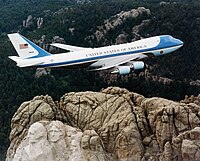
Privileges of office
The president is entitled to use the White House as his living and working quarters, and its entire staff and facilities, including medical care, kitchen, housekeeping and security staff. While traveling, the president is able to conduct the functions of the office from one of two custom-built Boeing 747 aircraft, known as Air Force One.[8] The president also utilizes a United States Marine Corps helicopter, designated Marine One when the president is aboard. Similarly, "Navy One", "Army One", and "Coast Guard One" are the call signs used if the president is aboard a craft belonging to these services.[9] For ground travel, the president uses an armored presidential limousine, currently a heavily modified Cadillac DTS which uses the call sign "Cadillac One".
Salary
The First U.S. Congress voted to pay George Washington a salary of $25,000 a year, about $566,000 in 2008 terms. Washington, already a wealthy man, refused to accept his salary; however, he asked for his living expenses to be covered. Theodore Roosevelt spent his entire $50,000 salary on entertaining guests at the White House.[10] John F. Kennedy donated his salary to charities.[11]
Traditionally, the president is the highest-paid public employee. President Bush currently earns $400,000 per year, along with a $50,000 expense account, a $100,000 nontaxable travel account, and $19,000 for entertainment.[2] The president's salary and total expense account serve as an unofficial cap for all other federal officials' salaries, such as that of the Chief Justice. The most recent raise in salary was approved by Congress and President Bill Clinton in 1999 and came into force in 2001; prior to the change, the president earned $200,000, plus expense accounts. This was needed because other officials who received annual cost-of-living increases had salaries approaching that of the president, and in order to raise their salaries further, his needed to be raised as well. Monetary compensation for the president is minuscule in comparison to the CEOs of most Fortune 500 companies and comparable to that of certain kinds of professionals, such as attorneys and physicians in some parts of the United States. Overall the vast majority of U.S. presidents were very affluent upon entering office and thus were not dependent on the salary.
Date established
Salary
Salary in 2007
dollars
September 24, 1789
$25,000
$566,000
March 3, 1873
$50,000
$865,000
March 4, 1909
$75,000
$1,714,000
January 19, 1949
$100,000
$875,000
January 20, 1969
$200,000
$1,135,000
January 20, 2001
$400,000
$471,000
Prior to passage by Congress of the Former Presidents Act (FPA) in 1958, retired presidents did not receive a pension. All living presidents in 1959 began to receive a pension of $25,000 per year, an office, and a staff. The pension has increased numerous times with Congressional approval. Retired presidents now receive a pension based on the salary of the current administration's cabinet secretaries (Executive Level I), which is $183,500 as of 2007.[15] Some former presidents have also collected congressional pensions.[16] The FPA, as amended, also provides former presidents with travel funds and mailing privileges.
Salary
The First U.S. Congress voted to pay George Washington a salary of $25,000 a year, about $566,000 in 2008 terms. Washington, already a wealthy man, refused to accept his salary; however, he asked for his living expenses to be covered. Theodore Roosevelt spent his entire $50,000 salary on entertaining guests at the White House.[10] John F. Kennedy donated his salary to charities.[11]
Traditionally, the president is the highest-paid public employee. President Bush currently earns $400,000 per year, along with a $50,000 expense account, a $100,000 nontaxable travel account, and $19,000 for entertainment.[2] The president's salary and total expense account serve as an unofficial cap for all other federal officials' salaries, such as that of the Chief Justice. The most recent raise in salary was approved by Congress and President Bill Clinton in 1999 and came into force in 2001; prior to the change, the president earned $200,000, plus expense accounts. This was needed because other officials who received annual cost-of-living increases had salaries approaching that of the president, and in order to raise their salaries further, his needed to be raised as well. Monetary compensation for the president is minuscule in comparison to the CEOs of most Fortune 500 companies and comparable to that of certain kinds of professionals, such as attorneys and physicians in some parts of the United States. Overall the vast majority of U.S. presidents were very affluent upon entering office and thus were not dependent on the salary.
Date established
Salary
Salary in 2007
dollars
September 24, 1789
$25,000
$566,000
March 3, 1873
$50,000
$865,000
March 4, 1909
$75,000
$1,714,000
January 19, 1949
$100,000
$875,000
January 20, 1969
$200,000
$1,135,000
January 20, 2001
$400,000
$471,000
Prior to passage by Congress of the Former Presidents Act (FPA) in 1958, retired presidents did not receive a pension. All living presidents in 1959 began to receive a pension of $25,000 per year, an office, and a staff. The pension has increased numerous times with Congressional approval. Retired presidents now receive a pension based on the salary of the current administration's cabinet secretaries (Executive Level I), which is $183,500 as of 2007.[15] Some former presidents have also collected congressional pensions.[16] The FPA, as amended, also provides former presidents with travel funds and mailing privileges.
President of the United States(7)
Duties and powers
Main article: Powers of the President of the United States
The president is the chief executive of the United States, putting him at the head of the executive branch of the government, whose responsibility is to "take care that the laws be faithfully executed". To carry out this duty, he is given control of the four million employees of the vast executive branch, including one million active duty personnel in the military. Both the legislative and judicial branches maintain checks and balances on the powers of the president, and vice versa.
Various executive and judicial branch appointments are made by presidents, including presidents-elect. Up to 6,000 appointments may be made by an incoming president before he takes office, and 8,000 more may be made while in office. Ambassadors, judges of the federal court system, members of the Cabinet, and other federal officers are all appointed by the president, with the "advice and consent" the Senate, granted by a simple majority. Appointments made while the Senate is in recess are temporary and expire at the end of the next session of the Senate. He may also grant pardons, as is often done just before the end of a presidential term.
In addition, while the president cannot directly introduce legislation, he can play an important role in shaping it, especially if the president's political party has a majority in one or both houses of Congress. While members of the executive branch are prohibited from simultaneously holding seats in Congress, they often write legislation and allow a member of Congress to introduce it for them. The president can further influence the legislative branch through the annual constitutionally-mandated report to Congress, which may be written or oral but in modern times is the State of the Union Address, which often outlines the president's legislative proposals for the coming year. If Congress passes a bill that the president disapproves of, he may veto it; the veto can be overridden only by two-thirds of both houses of Congress, making it substantially more difficult to enact the law.
Perhaps the most important of all presidential powers is command of the armed forces as commander-in-chief. The framers of the Constitution took care to limit the president's powers regarding the military; Federalist No. 69 states in part:
“
The President is to be commander-in-chief of the army and navy of the United States. [...] It would amount to nothing more than the supreme command and direction of the military and naval forces [...] while that [the power] of the British king extends to the DECLARING of war and to the RAISING and REGULATING of fleets and armies, all [of] which [...] would appertain to the legislature.[7]
”
While the power to declare war is constitutionally vested in Congress, the president commands and directs the military and is responsible for planning military strategy. Congress, pursuant the War Powers Act, must authorize any troop deployments more than 60 days in length. Military spending and regulations are also governed by Congress, providing a check to presidential power. Along with the armed forces, foreign policy is also directed by the president, including the ability to negotiate treaties, which are ratified with the consent by two-thirds of the Senate.
Source : http://en.wikipedia.org/wiki/President_of_the_United_States
Main article: Powers of the President of the United States
The president is the chief executive of the United States, putting him at the head of the executive branch of the government, whose responsibility is to "take care that the laws be faithfully executed". To carry out this duty, he is given control of the four million employees of the vast executive branch, including one million active duty personnel in the military. Both the legislative and judicial branches maintain checks and balances on the powers of the president, and vice versa.
Various executive and judicial branch appointments are made by presidents, including presidents-elect. Up to 6,000 appointments may be made by an incoming president before he takes office, and 8,000 more may be made while in office. Ambassadors, judges of the federal court system, members of the Cabinet, and other federal officers are all appointed by the president, with the "advice and consent" the Senate, granted by a simple majority. Appointments made while the Senate is in recess are temporary and expire at the end of the next session of the Senate. He may also grant pardons, as is often done just before the end of a presidential term.
In addition, while the president cannot directly introduce legislation, he can play an important role in shaping it, especially if the president's political party has a majority in one or both houses of Congress. While members of the executive branch are prohibited from simultaneously holding seats in Congress, they often write legislation and allow a member of Congress to introduce it for them. The president can further influence the legislative branch through the annual constitutionally-mandated report to Congress, which may be written or oral but in modern times is the State of the Union Address, which often outlines the president's legislative proposals for the coming year. If Congress passes a bill that the president disapproves of, he may veto it; the veto can be overridden only by two-thirds of both houses of Congress, making it substantially more difficult to enact the law.
Perhaps the most important of all presidential powers is command of the armed forces as commander-in-chief. The framers of the Constitution took care to limit the president's powers regarding the military; Federalist No. 69 states in part:
“
The President is to be commander-in-chief of the army and navy of the United States. [...] It would amount to nothing more than the supreme command and direction of the military and naval forces [...] while that [the power] of the British king extends to the DECLARING of war and to the RAISING and REGULATING of fleets and armies, all [of] which [...] would appertain to the legislature.[7]
”
While the power to declare war is constitutionally vested in Congress, the president commands and directs the military and is responsible for planning military strategy. Congress, pursuant the War Powers Act, must authorize any troop deployments more than 60 days in length. Military spending and regulations are also governed by Congress, providing a check to presidential power. Along with the armed forces, foreign policy is also directed by the president, including the ability to negotiate treaties, which are ratified with the consent by two-thirds of the Senate.
Source : http://en.wikipedia.org/wiki/President_of_the_United_States
President of the United States(6)
Oath of office and term of office
The President's term of office begins at noon on January 20 of the year following the election. This date, known as Inauguration Day, marks the beginning of the president's and vice president's four-year terms. Before assuming office, the president-elect is constitutionally required to take the presidential oath:
“
I do solemnly swear (or affirm) that I will faithfully execute the office of President of the United States, and will to the best of my ability, preserve, protect and defend the Constitution of the United States.[5]
”
Although it is not required, Presidents traditionally used a Bible to take oath of office (some exceptions: Chester A. Arthur in 1881 and Theodore Roosevelt in 1901 did not use a Bible, while Lyndon B. Johnson in 1963 used a Roman Catholic missal, because there were no Bibles aboard Air Force One).
Although no law requires that the oath of office must be administered by someone, new presidents are traditionally sworn-in by the Chief Justice of the United States. George Washington was sworn-in by Chancellor of New York Robert Livingston while John Tyler, Millard Fillmore, Chester A. Arthur, Theodore Roosevelt, Calvin Coolidge and Lyndon B. Johnson by lesser-capacity judges.
George Washington, the first president, set an unofficial term limit of two terms, which was generally followed by subsequent presidents as precedent. After the twelve-year presidency of Franklin D. Roosevelt, who was elected four times, but died shortly after beginning his fourth term, the Twenty-second Amendment to the Constitution was ratified, barring presidents from being elected more than twice, or once if they served more than half of another president's term. Prior to Roosevelt, several presidents had campaigned for a third term, but none were elected. Harry S. Truman, who was president at the time of the amendment's ratification and thus not subject to its terms, also briefly sought a third term before withdrawing from the 1952 race, although it would have been only his second full term as president.
Since the amendment's ratification, three presidents have served two full terms: Dwight D. Eisenhower, Ronald Reagan, and Bill Clinton. Richard Nixon was elected to a second term, but resigned before completing it; George W. Bush will become the fourth upon completion of his current term on January 20, 2009. Lyndon B. Johnson was the only president under the amendment to be eligible to serve more than two terms in total, having only served for 14 months following John F. Kennedy's assassination. However, he chose not to run in the 1968 election.
Removal from office
See also: Impeachment in the United States and United States presidential line of succession
Vacancies in the office of President may arise because of death, resignation, or removal from office. Articles One and Two of the Constitution allow the House of Representatives to impeach high federal officials, including the president, for "treason, bribery, or other high crimes and misdemeanors", and give the Senate the power to remove impeached officials from office, given a two-thirds vote to convict. Two presidents have thus far been impeached by the House, Andrew Johnson in 1868 and Bill Clinton in 1998. Neither was subsequently convicted by the Senate; however, Johnson was acquitted by just one vote.
Per the Twenty-fifth Amendment, the vice president and a majority of the Cabinet may suspend the president from discharging the powers and duties of the office once they transmit to the Speaker of the House and the President pro tempore of the Senate a statement declaring the president's incapacity to discharge the duties of the office. If this occurs, then the vice president will assume the powers and duties of President as Acting President; however, the president can declare that no such inability exists, and resume executing the Presidency. If the vice president and Cabinet contest this claim, it is up to Congress, which must meet within two days if not already in session, to decide the merit of the claim.
The United States Constitution mentions the resignation of the president but does not regulate the form of such a resignation or the conditions for its validity. By Act of Congress, the only valid evidence of the president's decision to resign is a written instrument declaring the resignation signed by the president and delivered to the office of the Secretary of State.[6] The only president to resign was Richard Nixon on August 9, 1974; he was facing likely impeachment in the midst of the Watergate scandal. Just before his resignation, the House Judiciary Committee had reported favorably on articles of impeachment against him.
The Constitution states that the vice president is to be the president's successor in the case of a vacancy. If both the president and vice president are killed or unable to serve for any reason, the next officer in the presidential line of succession, currently the Speaker of the House, becomes acting president. The list extends to the President pro tempore of the Senate after the Speaker, followed by every member of the Cabinet in a set order.
Source : http://en.wikipedia.org/wiki/President_of_the_United_States
The President's term of office begins at noon on January 20 of the year following the election. This date, known as Inauguration Day, marks the beginning of the president's and vice president's four-year terms. Before assuming office, the president-elect is constitutionally required to take the presidential oath:
“
I do solemnly swear (or affirm) that I will faithfully execute the office of President of the United States, and will to the best of my ability, preserve, protect and defend the Constitution of the United States.[5]
”
Although it is not required, Presidents traditionally used a Bible to take oath of office (some exceptions: Chester A. Arthur in 1881 and Theodore Roosevelt in 1901 did not use a Bible, while Lyndon B. Johnson in 1963 used a Roman Catholic missal, because there were no Bibles aboard Air Force One).
Although no law requires that the oath of office must be administered by someone, new presidents are traditionally sworn-in by the Chief Justice of the United States. George Washington was sworn-in by Chancellor of New York Robert Livingston while John Tyler, Millard Fillmore, Chester A. Arthur, Theodore Roosevelt, Calvin Coolidge and Lyndon B. Johnson by lesser-capacity judges.
George Washington, the first president, set an unofficial term limit of two terms, which was generally followed by subsequent presidents as precedent. After the twelve-year presidency of Franklin D. Roosevelt, who was elected four times, but died shortly after beginning his fourth term, the Twenty-second Amendment to the Constitution was ratified, barring presidents from being elected more than twice, or once if they served more than half of another president's term. Prior to Roosevelt, several presidents had campaigned for a third term, but none were elected. Harry S. Truman, who was president at the time of the amendment's ratification and thus not subject to its terms, also briefly sought a third term before withdrawing from the 1952 race, although it would have been only his second full term as president.
Since the amendment's ratification, three presidents have served two full terms: Dwight D. Eisenhower, Ronald Reagan, and Bill Clinton. Richard Nixon was elected to a second term, but resigned before completing it; George W. Bush will become the fourth upon completion of his current term on January 20, 2009. Lyndon B. Johnson was the only president under the amendment to be eligible to serve more than two terms in total, having only served for 14 months following John F. Kennedy's assassination. However, he chose not to run in the 1968 election.
Removal from office
See also: Impeachment in the United States and United States presidential line of succession
Vacancies in the office of President may arise because of death, resignation, or removal from office. Articles One and Two of the Constitution allow the House of Representatives to impeach high federal officials, including the president, for "treason, bribery, or other high crimes and misdemeanors", and give the Senate the power to remove impeached officials from office, given a two-thirds vote to convict. Two presidents have thus far been impeached by the House, Andrew Johnson in 1868 and Bill Clinton in 1998. Neither was subsequently convicted by the Senate; however, Johnson was acquitted by just one vote.
Per the Twenty-fifth Amendment, the vice president and a majority of the Cabinet may suspend the president from discharging the powers and duties of the office once they transmit to the Speaker of the House and the President pro tempore of the Senate a statement declaring the president's incapacity to discharge the duties of the office. If this occurs, then the vice president will assume the powers and duties of President as Acting President; however, the president can declare that no such inability exists, and resume executing the Presidency. If the vice president and Cabinet contest this claim, it is up to Congress, which must meet within two days if not already in session, to decide the merit of the claim.
The United States Constitution mentions the resignation of the president but does not regulate the form of such a resignation or the conditions for its validity. By Act of Congress, the only valid evidence of the president's decision to resign is a written instrument declaring the resignation signed by the president and delivered to the office of the Secretary of State.[6] The only president to resign was Richard Nixon on August 9, 1974; he was facing likely impeachment in the midst of the Watergate scandal. Just before his resignation, the House Judiciary Committee had reported favorably on articles of impeachment against him.
The Constitution states that the vice president is to be the president's successor in the case of a vacancy. If both the president and vice president are killed or unable to serve for any reason, the next officer in the presidential line of succession, currently the Speaker of the House, becomes acting president. The list extends to the President pro tempore of the Senate after the Speaker, followed by every member of the Cabinet in a set order.
Source : http://en.wikipedia.org/wiki/President_of_the_United_States
President of the United States(5)
Electoral College
Voters in each of the states elect a president on Election Day, set by law as the first Tuesday after the first Monday in November, once every four years; elections for other offices at all levels of government also occur on this date. Each state holds a number of electoral votes that correspond to electors in the Electoral College. Tickets of presidential and vice presidential candidates are shown on the ballot; each vote for the tickets actually corresponds to a vote for a slate of electors chosen by the candidates' political party. In most states, the ticket that wins the most votes in a state wins all of that state's electoral votes, and thus has their slate of electors chosen to vote in the Electoral College. Maine and Nebraska do not use this method, opting instead to give two electoral votes to the statewide winner and one electoral vote to the winner of each Congressional district. Neither state has split electoral votes between candidates as a result of this system in modern elections. In any case, the winning set of electors meets at their state's capital on the first Monday after the second Wednesday in December, a few weeks after the election, to vote, and sends a vote count to Congress.
The vote count is opened by the sitting vice president, acting in his capacity as President of the Senate, and read aloud to a joint session of the incoming Congress, which was elected at the same time as the president. Members of Congress can object to any state's vote count, provided that the objection is supported by at least one member of each house of Congress. A successful objection will be followed by debate; however, objections to the electoral vote count are rarely raised.
In the event that no candidate receives a majority of the electoral vote, the House of Representatives chooses the president from among the top three contenders. However, the House does not vote normally; instead, each state delegation is given only one vote, marginalizing the importance of more populous states. The vice president is chosen through normal voting in the Senate, where each state delegation is already of equal size.
Rationale
When the Constitution was written, the framers disagreed on the selection of the president: some favored national popular vote, while others wanted Congress to choose the president. The Electoral College was created as a compromise between the two proposals. It gave rural areas and smaller states a slightly larger role in determining the outcome of the election, and it continues to do so today; for example, the largest state by population, California, only has about one electoral vote for every 660,000 residents, while the smallest, Wyoming, has an electoral vote for about every 170,000.
Today, most of the electoral process is a formality in the public eye, as the choice of electors determines the result of the election, with a few exceptions. However, the Twelfth Amendment was written in a time when voters at large had little knowledge of candidates outside their state. As a result, the amendment accommodated this; the electors that voters had chosen were supposed to learn about the other candidates, and make an informed decision that represented the wishes of their constituents. Modern communication has rendered this unnecessary, and as a result, voters now choose between electors that are already pledged to a presidential candidate.
Source : http://en.wikipedia.org/wiki/President_of_the_United_States
Voters in each of the states elect a president on Election Day, set by law as the first Tuesday after the first Monday in November, once every four years; elections for other offices at all levels of government also occur on this date. Each state holds a number of electoral votes that correspond to electors in the Electoral College. Tickets of presidential and vice presidential candidates are shown on the ballot; each vote for the tickets actually corresponds to a vote for a slate of electors chosen by the candidates' political party. In most states, the ticket that wins the most votes in a state wins all of that state's electoral votes, and thus has their slate of electors chosen to vote in the Electoral College. Maine and Nebraska do not use this method, opting instead to give two electoral votes to the statewide winner and one electoral vote to the winner of each Congressional district. Neither state has split electoral votes between candidates as a result of this system in modern elections. In any case, the winning set of electors meets at their state's capital on the first Monday after the second Wednesday in December, a few weeks after the election, to vote, and sends a vote count to Congress.
The vote count is opened by the sitting vice president, acting in his capacity as President of the Senate, and read aloud to a joint session of the incoming Congress, which was elected at the same time as the president. Members of Congress can object to any state's vote count, provided that the objection is supported by at least one member of each house of Congress. A successful objection will be followed by debate; however, objections to the electoral vote count are rarely raised.
In the event that no candidate receives a majority of the electoral vote, the House of Representatives chooses the president from among the top three contenders. However, the House does not vote normally; instead, each state delegation is given only one vote, marginalizing the importance of more populous states. The vice president is chosen through normal voting in the Senate, where each state delegation is already of equal size.
Rationale
When the Constitution was written, the framers disagreed on the selection of the president: some favored national popular vote, while others wanted Congress to choose the president. The Electoral College was created as a compromise between the two proposals. It gave rural areas and smaller states a slightly larger role in determining the outcome of the election, and it continues to do so today; for example, the largest state by population, California, only has about one electoral vote for every 660,000 residents, while the smallest, Wyoming, has an electoral vote for about every 170,000.
Today, most of the electoral process is a formality in the public eye, as the choice of electors determines the result of the election, with a few exceptions. However, the Twelfth Amendment was written in a time when voters at large had little knowledge of candidates outside their state. As a result, the amendment accommodated this; the electors that voters had chosen were supposed to learn about the other candidates, and make an informed decision that represented the wishes of their constituents. Modern communication has rendered this unnecessary, and as a result, voters now choose between electors that are already pledged to a presidential candidate.
Source : http://en.wikipedia.org/wiki/President_of_the_United_States
President of the United States(4)
Election
Main article: United States presidential election
A map of the United States showing the number of electoral votes currently allocated to each state; 270 electoral votes are required for a majority out of 538 overall
Unlike most other countries using the presidential system, presidents are elected indirectly in the United States. A number of electors, collectively known as the United States Electoral College, select the president instead. Each state is allocated a number of electors, equal to the size of its delegation in both houses of Congress combined. Additionally, the Twenty-third Amendment to the Constitution grants electors to the District of Columbia as if it were a state, with the restriction that it may not have more representation than the least populated state. Electoral apportionment is adjusted every ten years, in alignment with the census. State legislatures are constitutionally empowered to appoint electors, however, all of the fifty states have established their popular selection.
History
Article Two of the Constitution originally established the method of presidential election. It also used an electoral college, but there was a major difference in the voting system. Each elector cast two votes, with the intention that one would be used for a presidential and the other for a vice presidential candidate. The candidate with the highest number of votes would become the president, with the second-place candidate becoming the vice president.
However, the 1796 and 1800 elections highlighted flaws in the electoral system in use at the time. In particular, the tie in the electoral vote that resulted from the lack of separation between presidential and vice presidential votes in the latter election was an issue. The Democratic-Republican Party's candidates, who won the election, were tied with each other, and as a result, the election was thrown to the House of Representatives in the outgoing Federalist Party-controlled 6th Congress. Federalist representatives attempted to elect Aaron Burr, the Democratic-Republican candidate for vice president, over Thomas Jefferson, the presidential candidate. Jefferson eventually won after Alexander Hamilton managed to swing one state delegation's vote to him. As a result, Congress proposed the Twelfth Amendment to the Constitution in 1803, and it was ratified in 1804. This amendment created the electoral system used today.
Campaign
Main articles: United States presidential primary, United States presidential nominating convention, and United States presidential election debates
The modern presidential campaign begins before the primary elections, which the two major political parties use to clear the field of candidates in advance of their national nominating conventions, where the most successful candidate is made the party's nominee for president. The party's presidential candidate chooses a vice presidential nominee and this choice is rubber-stamped by the convention. Also, the party establishes a platform on which to base its campaign. Although nominating conventions have a long history in the United States, their substantive importance in the political process has greatly diminished; however, they remain important as a way of energizing the parties for the general election and focusing public attention on the nominees.
Nominees participate in nationally televised debates, and while the debates are usually restricted to the Democratic and Republican nominees, third party candidates may be invited, such as Ross Perot in the 1992 debates. Nominees campaign across the country to explain their views, convince voters, and solicit contributions. Much of the modern electoral process is concerned with winning swing states through frequent visits and mass media advertising drives.
Source : http://en.wikipedia.org/wiki/President_of_the_United_States
Main article: United States presidential election
A map of the United States showing the number of electoral votes currently allocated to each state; 270 electoral votes are required for a majority out of 538 overall
Unlike most other countries using the presidential system, presidents are elected indirectly in the United States. A number of electors, collectively known as the United States Electoral College, select the president instead. Each state is allocated a number of electors, equal to the size of its delegation in both houses of Congress combined. Additionally, the Twenty-third Amendment to the Constitution grants electors to the District of Columbia as if it were a state, with the restriction that it may not have more representation than the least populated state. Electoral apportionment is adjusted every ten years, in alignment with the census. State legislatures are constitutionally empowered to appoint electors, however, all of the fifty states have established their popular selection.
History
Article Two of the Constitution originally established the method of presidential election. It also used an electoral college, but there was a major difference in the voting system. Each elector cast two votes, with the intention that one would be used for a presidential and the other for a vice presidential candidate. The candidate with the highest number of votes would become the president, with the second-place candidate becoming the vice president.
However, the 1796 and 1800 elections highlighted flaws in the electoral system in use at the time. In particular, the tie in the electoral vote that resulted from the lack of separation between presidential and vice presidential votes in the latter election was an issue. The Democratic-Republican Party's candidates, who won the election, were tied with each other, and as a result, the election was thrown to the House of Representatives in the outgoing Federalist Party-controlled 6th Congress. Federalist representatives attempted to elect Aaron Burr, the Democratic-Republican candidate for vice president, over Thomas Jefferson, the presidential candidate. Jefferson eventually won after Alexander Hamilton managed to swing one state delegation's vote to him. As a result, Congress proposed the Twelfth Amendment to the Constitution in 1803, and it was ratified in 1804. This amendment created the electoral system used today.
Campaign
Main articles: United States presidential primary, United States presidential nominating convention, and United States presidential election debates
The modern presidential campaign begins before the primary elections, which the two major political parties use to clear the field of candidates in advance of their national nominating conventions, where the most successful candidate is made the party's nominee for president. The party's presidential candidate chooses a vice presidential nominee and this choice is rubber-stamped by the convention. Also, the party establishes a platform on which to base its campaign. Although nominating conventions have a long history in the United States, their substantive importance in the political process has greatly diminished; however, they remain important as a way of energizing the parties for the general election and focusing public attention on the nominees.
Nominees participate in nationally televised debates, and while the debates are usually restricted to the Democratic and Republican nominees, third party candidates may be invited, such as Ross Perot in the 1992 debates. Nominees campaign across the country to explain their views, convince voters, and solicit contributions. Much of the modern electoral process is concerned with winning swing states through frequent visits and mass media advertising drives.
Source : http://en.wikipedia.org/wiki/President_of_the_United_States
President of the United States(3)
Qualification, disqualification and common practice
Article Two of the Constitution sets the principal qualifications to be eligible for election as President. A Presidential candidate must:
be a natural-born citizen of the United States
be at least thirty-five years old
have been resident in the United States for at least fourteen years
Additionally, there are two negative qualifications. Under Article One of the United States Constitution, no Presidential candidate can have previously held the office and been removed by conviction for an impeachable offense. And under the Twenty-Second Amendment, no person who has previously served as President or Acting President for more than six years (one full-term and two additional years) is eligible for election to the Presidency or to the Vice Presidency. Former Presidents who have served less than six years as President or Acting President, however, remain eligible for the presidency (assuming they were not removed from office by the Congress on a bill of impeachment) for one term only; but their eligibility to serve as Vice President is unlimited, because Amendment XXII only applies to the Presidency.
Foreign-born Americans at the time the Constitution was adopted were also eligible to become President, provided they met the age and residency requirements.
The United States Government was non-partisan prior to 1792, so the Constitution says nothing about political parties. From 1796 to the Civil War, it was common for political parties to fracture and put forward more than one candidate. The classic example is the 1824 election, in which political parties officially played no role because all of the candidates were from the same party. This also was the only election in which the recipient of the most Electoral votes (Andrew Jackson) did not become President (as he did not have a majority of the Electoral College votes). The election was then decided by the United States House of Representatives who elected John Quincy Adams as President instead.
The Civil War brought home how dangerous political fracture can be for the nation, with the result the two largest parties at the time—Democratic and Republican—remade themselves into broad coalitions of liberals and conservatives. Consequently, all presidents since the Civil War have been nominees of one of these two major political parties.
Nevertheless, there have been seven important third-party candidates since the Civil War:
In the 1892 election, James Weaver (Populist Party) won four states, taking twenty-two electoral votes
In the 1912 election, third-party candidate, former Republican and former President Theodore Roosevelt (Progressive Party a.k.a. "Bull Moose Party") actually bested the losing major party candidate, taking six states and eighty-eight electoral votes, while sitting President William Howard Taft (Republican) took two states and eight electoral votes—and Democrat Woodrow Wilson took the White House.
In the 1924 election, Robert M. La Follette, Sr. (Progressive) took one state, with thirteen electoral votes.
In the 1948 election, Strom Thurmond (Dixiecrat) won four states, taking thirty-nine electoral votes
In the 1960 election, Harry F. Byrd (Democrat) did not run for President but received fifteen electoral votes from three states. All eight of Mississippi's electors voted for Byrd as President and Strom Thurmond as Vice President; six of Alabama's electors did likewise, while one faithless Republican elector from Oklahoma cast his votes for Byrd as President and for Barry Goldwater as Vice President.
In the 1968 election, Alabama Governor George Wallace (American Independent Party) won five states, taking forty-six electoral votes.
In the 1992 election, Reform Party candidate Ross Perot took nearly 19% of the popular vote at the national level, but he won no states and thus received no electoral votes.
In 2005, two amendments to the Constitution of the United States were proposed to permit persons having been citizens of the United States for many years but not being natural-born citizens to hold the Office of President. Neither bill got any further action beyond that year. H.J.RES.2, introduced on January 4, 2005, sponsored by Rep. John Conyers, Jr. (D-MI-14) and cosponsored by Rep. Brad Sherman (D-CA-27), would require 20 years of citizenship for naturalized Americans to be eligible to hold the Office of President.[3] H.J.RES.42, introduced on April 14, 2005, sponsored by Rep. Vic Snyder (D-AR-2) and cosponsored by Christopher Shays (R-CT-4), would require 35 years of citizenship for naturalized Americans to be eligible to hold the offices of President and Vice President.[4]
Finally, while they are not in any way requirements:
Thirty-one of forty-two Presidents had military service records; all but one of them (James Buchanan) served as an officer
Every president has had prior experience as a Congressman, Senator, Cabinet Secretary, Governor, General in the U.S. Army, or as Vice President of the United States.
Every president to date has been a white male, but this may change in the next election with either Hillary Clinton or Barack Obama running for the Democrats.
Source : http://en.wikipedia.org/wiki/President_of_the_United_States
Article Two of the Constitution sets the principal qualifications to be eligible for election as President. A Presidential candidate must:
be a natural-born citizen of the United States
be at least thirty-five years old
have been resident in the United States for at least fourteen years
Additionally, there are two negative qualifications. Under Article One of the United States Constitution, no Presidential candidate can have previously held the office and been removed by conviction for an impeachable offense. And under the Twenty-Second Amendment, no person who has previously served as President or Acting President for more than six years (one full-term and two additional years) is eligible for election to the Presidency or to the Vice Presidency. Former Presidents who have served less than six years as President or Acting President, however, remain eligible for the presidency (assuming they were not removed from office by the Congress on a bill of impeachment) for one term only; but their eligibility to serve as Vice President is unlimited, because Amendment XXII only applies to the Presidency.
Foreign-born Americans at the time the Constitution was adopted were also eligible to become President, provided they met the age and residency requirements.
The United States Government was non-partisan prior to 1792, so the Constitution says nothing about political parties. From 1796 to the Civil War, it was common for political parties to fracture and put forward more than one candidate. The classic example is the 1824 election, in which political parties officially played no role because all of the candidates were from the same party. This also was the only election in which the recipient of the most Electoral votes (Andrew Jackson) did not become President (as he did not have a majority of the Electoral College votes). The election was then decided by the United States House of Representatives who elected John Quincy Adams as President instead.
The Civil War brought home how dangerous political fracture can be for the nation, with the result the two largest parties at the time—Democratic and Republican—remade themselves into broad coalitions of liberals and conservatives. Consequently, all presidents since the Civil War have been nominees of one of these two major political parties.
Nevertheless, there have been seven important third-party candidates since the Civil War:
In the 1892 election, James Weaver (Populist Party) won four states, taking twenty-two electoral votes
In the 1912 election, third-party candidate, former Republican and former President Theodore Roosevelt (Progressive Party a.k.a. "Bull Moose Party") actually bested the losing major party candidate, taking six states and eighty-eight electoral votes, while sitting President William Howard Taft (Republican) took two states and eight electoral votes—and Democrat Woodrow Wilson took the White House.
In the 1924 election, Robert M. La Follette, Sr. (Progressive) took one state, with thirteen electoral votes.
In the 1948 election, Strom Thurmond (Dixiecrat) won four states, taking thirty-nine electoral votes
In the 1960 election, Harry F. Byrd (Democrat) did not run for President but received fifteen electoral votes from three states. All eight of Mississippi's electors voted for Byrd as President and Strom Thurmond as Vice President; six of Alabama's electors did likewise, while one faithless Republican elector from Oklahoma cast his votes for Byrd as President and for Barry Goldwater as Vice President.
In the 1968 election, Alabama Governor George Wallace (American Independent Party) won five states, taking forty-six electoral votes.
In the 1992 election, Reform Party candidate Ross Perot took nearly 19% of the popular vote at the national level, but he won no states and thus received no electoral votes.
In 2005, two amendments to the Constitution of the United States were proposed to permit persons having been citizens of the United States for many years but not being natural-born citizens to hold the Office of President. Neither bill got any further action beyond that year. H.J.RES.2, introduced on January 4, 2005, sponsored by Rep. John Conyers, Jr. (D-MI-14) and cosponsored by Rep. Brad Sherman (D-CA-27), would require 20 years of citizenship for naturalized Americans to be eligible to hold the Office of President.[3] H.J.RES.42, introduced on April 14, 2005, sponsored by Rep. Vic Snyder (D-AR-2) and cosponsored by Christopher Shays (R-CT-4), would require 35 years of citizenship for naturalized Americans to be eligible to hold the offices of President and Vice President.[4]
Finally, while they are not in any way requirements:
Thirty-one of forty-two Presidents had military service records; all but one of them (James Buchanan) served as an officer
Every president has had prior experience as a Congressman, Senator, Cabinet Secretary, Governor, General in the U.S. Army, or as Vice President of the United States.
Every president to date has been a white male, but this may change in the next election with either Hillary Clinton or Barack Obama running for the Democrats.
Source : http://en.wikipedia.org/wiki/President_of_the_United_States
President of the United States(2)

Origin
The Treaty of Paris (1783) left the United States independent and at peace but with an unsettled governmental structure. The Second Continental Congress had drawn up Articles of Confederation in 1777, describing a permanent confederation but granting to the Congress—the only federal institution—little power to finance itself or to ensure that its resolutions were enforced. In part this reflected the anti-monarchy view of the Revolutionary period, and the new American system was explicitly designed to prevent the rise of an American tyrant to replace the British King.
The Treaty of Paris (1783) left the United States independent and at peace but with an unsettled governmental structure. The Second Continental Congress had drawn up Articles of Confederation in 1777, describing a permanent confederation but granting to the Congress—the only federal institution—little power to finance itself or to ensure that its resolutions were enforced. In part this reflected the anti-monarchy view of the Revolutionary period, and the new American system was explicitly designed to prevent the rise of an American tyrant to replace the British King.
However, during the economic depression due to the collapse of the continental dollar following the Revolutionary War, the viability of the American government was threatened by political unrest in several states, efforts by debtors to use popular government to erase their debts, and the apparent inability of the Continental Congress to redeem the public obligations incurred during the war. The Congress also appeared unable to become a forum for productive cooperation among the States encouraging commerce and economic development. In response a Constitutional Convention was convened, ostensibly to reform the Articles of Confederation but that subsequently began to draft a new system of government that would include greater executive power while retaining the checks and balances thought to be essential restraints on any imperial tendency in the office of the President.
Individuals who presided over the Continental Congress during the Revolutionary period and under the Articles of Confederation had the title "President of the United States of America in Congress Assembled", often shortened to "President of the United States". The office had little distinct executive power. With the 1788 ratification of the Constitution, a separate executive branch was created (President of the United States).
The President's executive authority under the Constitution, tempered by the checks and balances of the judicial and legislative branches of the federal government, was designed to solve several political problems faced by the young nation and to anticipate future challenges, while still preventing the rise of an autocrat over a nation wary of royal authority.
Source : http://en.wikipedia.org/wiki/President_of_the_United_States
Individuals who presided over the Continental Congress during the Revolutionary period and under the Articles of Confederation had the title "President of the United States of America in Congress Assembled", often shortened to "President of the United States". The office had little distinct executive power. With the 1788 ratification of the Constitution, a separate executive branch was created (President of the United States).
The President's executive authority under the Constitution, tempered by the checks and balances of the judicial and legislative branches of the federal government, was designed to solve several political problems faced by the young nation and to anticipate future challenges, while still preventing the rise of an autocrat over a nation wary of royal authority.
Source : http://en.wikipedia.org/wiki/President_of_the_United_States
President of the United States(1)
The President of the United States of America is the head of state and head of government of the United States. The President is at the head of the executive branch of the federal government, whose role is to enforce national law as given in the Constitution and written by Congress. Article Two of the Constitution establishes the President as commander-in-chief of the armed forces and enumerates powers specifically granted to the President, including the power to sign into law or veto bills passed by both houses of Congress. The President also has the power to create a cabinet of advisers and to grant pardons or reprieves. Finally, with the "advice and consent" of the Senate, the President is empowered to make treaties and appoint federal officers ambassadors, and federal judges, including Justices of the Supreme Court. As with officials in the other branches of the United States government, the Constitution restrains the President with a set of checks and balances designed to prevent any individual or group from taking absolute power.
The President is elected indirectly through the United States Electoral College to a four year term, with a limit of two terms imposed by the Twenty-second Amendment to the Constitution, ratified in 1951. Under this system, each state is allocated a number of electoral votes, equal to the size of the state's delegation in both houses of Congress combined. The District of Columbia is also granted electoral votes, per the Twenty-third Amendment to the Constitution. Voters in nearly all states choose a presidential candidate through the plurality voting system, who then receives all of that state's electoral votes. A simple majority of electoral votes is needed to become President; if no candidate receives that many votes, the election is thrown to the House of Representatives, which votes by state delegation.
Since the adoption of the Constitution, forty-two individuals have been elected or succeeded into the presidency, the first being George Washington, serving fifty-five four-year terms altogether. Grover Cleveland served two non-consecutive terms and is counted as both the 22nd and the 24th president. Because of this, all presidents after the 23rd have their official listing increased by one. Current President George W. Bush, the forty-second person to be elected President and forty-third President, was inaugurated on January 20, 2001 to a first term and on January 20, 2005 to a second. His second term expires at noon on January 20, 2009, after which he will be succeeded by the president-elect from the 2008 presidential election.
The White House in Washington, D.C. serves as the official place of residence for the President; he is entitled to use its staff and facilities, including medical care, recreation, housekeeping, and security services. One of two Boeing VC-25 aircraft, which are extensively modified versions of Boeing 747-200B airliners, serve as long distance travel for the President, and are referred to as Air Force One while the president is on board.[1] A salary of $400,000, along with other benefits, is paid to the President annually.[2]
From the middle of the twentieth century, the United States' status as a superpower has led the American President to be dubbed "the most powerful person on earth" and he has become one of the world's most well-known and influential public figures. The official presidential anthem is Hail to the Chief. It is played whenever the President makes a public appearance.
Source : http://en.wikipedia.org/wiki/President_of_the_United_States
The President is elected indirectly through the United States Electoral College to a four year term, with a limit of two terms imposed by the Twenty-second Amendment to the Constitution, ratified in 1951. Under this system, each state is allocated a number of electoral votes, equal to the size of the state's delegation in both houses of Congress combined. The District of Columbia is also granted electoral votes, per the Twenty-third Amendment to the Constitution. Voters in nearly all states choose a presidential candidate through the plurality voting system, who then receives all of that state's electoral votes. A simple majority of electoral votes is needed to become President; if no candidate receives that many votes, the election is thrown to the House of Representatives, which votes by state delegation.
Since the adoption of the Constitution, forty-two individuals have been elected or succeeded into the presidency, the first being George Washington, serving fifty-five four-year terms altogether. Grover Cleveland served two non-consecutive terms and is counted as both the 22nd and the 24th president. Because of this, all presidents after the 23rd have their official listing increased by one. Current President George W. Bush, the forty-second person to be elected President and forty-third President, was inaugurated on January 20, 2001 to a first term and on January 20, 2005 to a second. His second term expires at noon on January 20, 2009, after which he will be succeeded by the president-elect from the 2008 presidential election.
The White House in Washington, D.C. serves as the official place of residence for the President; he is entitled to use its staff and facilities, including medical care, recreation, housekeeping, and security services. One of two Boeing VC-25 aircraft, which are extensively modified versions of Boeing 747-200B airliners, serve as long distance travel for the President, and are referred to as Air Force One while the president is on board.[1] A salary of $400,000, along with other benefits, is paid to the President annually.[2]
From the middle of the twentieth century, the United States' status as a superpower has led the American President to be dubbed "the most powerful person on earth" and he has become one of the world's most well-known and influential public figures. The official presidential anthem is Hail to the Chief. It is played whenever the President makes a public appearance.
Source : http://en.wikipedia.org/wiki/President_of_the_United_States
Sunday, February 24, 2008
元宵佳節花燈盛會 : 才子佳人喜成雙
香港康文署今年分別在文代中心露天廣場、西九龍海濱長廊、高山劇場、青衣公園及將軍澳寶翠公園舉行多場元宵佳節綵燈會。
青衣公園舉行的綵燈會,展出7米高的綵燈《才子佳人喜成雙》及一些水上綵燈, 最具特色。


青衣公園舉行的綵燈會,展出7米高的綵燈《才子佳人喜成雙》及一些水上綵燈, 最具特色。


Saturday, February 23, 2008
Friday, February 22, 2008
250天平均綫
昨天港股下跌, 失守250天平均綫; 今天港股開市隨美股造好, 但其後升幅收窄, 至收市僅微升32點, 收市報23623點,成交額754億港元。今天收市仍低於250天平均綫水平, 後市令人憂慮。
250天平均綫, 俗稱牛熊分界綫, 乃是股市的景氣指標。通常股市穿破250天平均綫, 便會來一次大反彈。若是連續多個交易日均徘徊於250天平均綫之下, 不論股市升跌, 都表示市況反覆尋底趨勢已形成 !
雖然短期港股在24,000點水平有明顯支持, 但這是否反覆尋底的大陷阱 ?!
本星期中國公佈一月份消費物價指數, 通脹率達到7.1%, 創了11年來新高 !
昨天美國公佈經濟數據, 通脹持續升温, 而房地產市場繼續受壓 !
中國受到雪災影响, 急需放寬銀根, 支持救災及重建項目。然而通脹急劇惡化, 使到中央政府不敢貿然減息, 施行政策方面, 顯得進退維谷。
美國受到經濟衰退威脅, 需要繼續減息振興經濟, 而聯儲局局長早已暗示將會進一步減息。但是美國通脹持續升温, 明顯收窄了減息空間和彈性。
中美兩國同時面對矛盾重重的經濟情況, 問題難以於短期內解決。這對全球股市, 帶來了極多的不明朗因素。
請大家別忘記, 次按問題的高峯期, 在本年三月份。而每年二、三月份, 亦是日本企業的結算期。
在中美兩國經濟受到重重困阻的時候, 會否再爆發更嚴重的次按危機, 以及日元拆倉潮呢 ?
凡此種種, 投資者均不能掉以輕心 !
250天平均綫, 俗稱牛熊分界綫, 乃是股市的景氣指標。通常股市穿破250天平均綫, 便會來一次大反彈。若是連續多個交易日均徘徊於250天平均綫之下, 不論股市升跌, 都表示市況反覆尋底趨勢已形成 !
雖然短期港股在24,000點水平有明顯支持, 但這是否反覆尋底的大陷阱 ?!
本星期中國公佈一月份消費物價指數, 通脹率達到7.1%, 創了11年來新高 !
昨天美國公佈經濟數據, 通脹持續升温, 而房地產市場繼續受壓 !
中國受到雪災影响, 急需放寬銀根, 支持救災及重建項目。然而通脹急劇惡化, 使到中央政府不敢貿然減息, 施行政策方面, 顯得進退維谷。
美國受到經濟衰退威脅, 需要繼續減息振興經濟, 而聯儲局局長早已暗示將會進一步減息。但是美國通脹持續升温, 明顯收窄了減息空間和彈性。
中美兩國同時面對矛盾重重的經濟情況, 問題難以於短期內解決。這對全球股市, 帶來了極多的不明朗因素。
請大家別忘記, 次按問題的高峯期, 在本年三月份。而每年二、三月份, 亦是日本企業的結算期。
在中美兩國經濟受到重重困阻的時候, 會否再爆發更嚴重的次按危機, 以及日元拆倉潮呢 ?
凡此種種, 投資者均不能掉以輕心 !
元宵佳節
 女孩特別到許願燈區,祈求一切順利
資料來源 : 人民網 http://tw.people.com.cn/BIG5/14812/14874/3198914.html
元宵節, 中國的傳統節日, 已經有兩千多年歷史,亦有稱為『元夕節』。
『元』,月亮正圓也。『宵』, 夜也。元宵, 即是每年第一個月圓之夜。
中國傳統曆法,每年均有『三元』: 正月十五為『上元』,七月十五乃是『中元』,十月十五屬『下元』。
元宵佳節在正月十五, 因此被稱作『上元節』。
元宵佳節的起源,眾說紛紜, 出處甚多。
其一與祭祀『泰一神』有關。泰一神, 亦即是『太乙真神』,負責掌管人間的風雨、飢饉、瘟疫 … 等等。
漢武帝曾經大病良久,羣醫束手無策, 武帝後來參拜太乙真神, 俟後便康復了。
為酬謝神恩, 漢武帝於西元前122年建太乙祠壇祭祀,每年正月十五上元之夜, 通宵達旦地以盛大燈火祭祀。民間爭相彷效, 因此便形成於上元之夜隆重張燈結彩的習俗 !
另有一說, 起源於東漢。
東漢明帝乃虔誠佛教徒,於上元之夜在各大皇宮、寺院燃點各式花燈, 表揚佛法。朝廷下令各士大夫、貴族、平民百姓一律掛燈,以示對上蒼的敬意。此後代代相傳, 成為習俗。
隨著時代的演變, 元宵佳節的習俗在每個朝代均有分別。
隋唐年間,元宵夜張燈賞燈的習俗演變成民間盛大慶典, 放燈日子由一晚增至三晚。北宋時代,張燈日子增加至五晚,南宋時期增至六晚,明朝時代為十晚。
中國古代的元宵佳節, 宗教氣氛濃厚; 但時至今日, 已演變為情人相叙、一家團圓的喜慶節日。
2008年戊子年十二生肖運程(下)
羊肖
肖羊的朋友, 性格温馴和善, 慈悲而具包容之心。
在戊子年, 子未相害, 屬犯太歲一族。
流年月德吉星照耀, 可助肖羊的朋友萬事逢凶化吉, 廣結善緣。祇要肖羊的朋友能好好維繫身邊的朋友和同事的關係, 團結朋友和同事的力量, 在戊子年可以另有一番作為。在戊子年, 肖羊的朋友做事要創新, 不能固守舊有的一套。控制情緒, 埋首工作, 乃是肖羊人士在戊子年的致勝之道。流年受到小耗、咸池、死符等等凶星影响, 必須節制開支, 亦要小心身體健康。
最需要小心的乃是感情和情慾方面, 在大桃花年, 肖羊人士桃花旺盛, 必須小心處理。
猴肖
肖猴的朋友活潑好動, 精力旺盛, 若能致力廣結人緣, 將精神時間集中於工作方面, 不難有一番作為。
在戊子年肖猴的朋友受到三台、金匱、將星等等吉星照耀, 真的可喜可賀。三台乃事業上掌權的像徵, 工作順利, 升遷有望。金匱代表可得大財, 埋首工作可獲豐碩成果。將星乃是得力的下屬和助手, 有助開拓事業。所有吉星綜合顯示, 在戊子年肖猴的朋友必須努力工作, 全力以赴, 將可締造美滿佳績, 大豐收的一年。
肖猴的朋友, 請好好珍惜把握這美好的年頭。
流年受到五鬼和官符兩大凶星加害, 小心處理工作上的文件和合約, 亦必須小心處理一切法律事項。五鬼作崇, 提防小人暗中作梗加害。
在戊子年祇要能廣結人緣, 處事小心謹慎, 凶星的力量不大, 放心 !
雞肖
肖雞的朋友, 孤芳自賞, 自得其樂。經常沉醉在自己的夢想世界中, 稍欠一點人情世故。
在戊子年, 子酉相破, 屬犯太歲一族。
戊子年的太歲, 對肖雞的朋友並不差。 因為戊子年提供了很多新的機會給肖雞的朋友, 助其開創新的局面。 肖雞的朋友流年受到太陰及天喜兩大吉星加持, 太陰利女助其逢凶化吉, 而天喜則是一顆喜慶星, 全年喜事多多, 心情暢快。
若肖雞人士能融入朋友圈子中, 在戊子年事業上能有全新的發展, 可喜可賀 !
狗肖
肖狗的朋友忠實善良, 對家人及朋友忠心耿耿。
戊子年乃肖狗朋友的豐收年, 必須善加掌握, 締造美好佳績。流年受到天解、解神及八座多顆吉星照耀, 地位提升, 功名可期, 凡事逢凶化吉, 可喜可賀 ! 流年亦受到血刃、浮沉、喪門等等凶星影响, 易與人起爭執, 財來財去, 亦有一些不愉快事情影响心情。
但吉星力量強大, 其他一切, 均屬小事。
豬肖
肖豬的朋友聰敏機靈, 活潑可愛; 缺點是有一些孤芳自賞, 自視過高。
肖豬的朋友在戊子年桃花盛放, 未婚者能覓得心儀對像, 共諧連理。這一點, 以女性肖豬人士尤甚。恭喜 !
桃花盛放, 情慾需求殷切, 若是已婚人士而與丈夫、妻子魚水交歡, 正常之事。但若因為情慾氾濫而醉酒花街, 或衍生婚外情, 則得不償失。
流年遇咸池、天空兩大凶星飛臨, 咸池主性事情慾, 天空則自視過高。
肖豬的朋友受到吉星太陽照耀, 此吉星大利男性, 可以四方闖蕩, 開創事業。
總結肖豬人士的戊子年際遇, 男的四方見利, 女的則以一個「情」字為主題。
肖羊的朋友, 性格温馴和善, 慈悲而具包容之心。
在戊子年, 子未相害, 屬犯太歲一族。
流年月德吉星照耀, 可助肖羊的朋友萬事逢凶化吉, 廣結善緣。祇要肖羊的朋友能好好維繫身邊的朋友和同事的關係, 團結朋友和同事的力量, 在戊子年可以另有一番作為。在戊子年, 肖羊的朋友做事要創新, 不能固守舊有的一套。控制情緒, 埋首工作, 乃是肖羊人士在戊子年的致勝之道。流年受到小耗、咸池、死符等等凶星影响, 必須節制開支, 亦要小心身體健康。
最需要小心的乃是感情和情慾方面, 在大桃花年, 肖羊人士桃花旺盛, 必須小心處理。
猴肖
肖猴的朋友活潑好動, 精力旺盛, 若能致力廣結人緣, 將精神時間集中於工作方面, 不難有一番作為。
在戊子年肖猴的朋友受到三台、金匱、將星等等吉星照耀, 真的可喜可賀。三台乃事業上掌權的像徵, 工作順利, 升遷有望。金匱代表可得大財, 埋首工作可獲豐碩成果。將星乃是得力的下屬和助手, 有助開拓事業。所有吉星綜合顯示, 在戊子年肖猴的朋友必須努力工作, 全力以赴, 將可締造美滿佳績, 大豐收的一年。
肖猴的朋友, 請好好珍惜把握這美好的年頭。
流年受到五鬼和官符兩大凶星加害, 小心處理工作上的文件和合約, 亦必須小心處理一切法律事項。五鬼作崇, 提防小人暗中作梗加害。
在戊子年祇要能廣結人緣, 處事小心謹慎, 凶星的力量不大, 放心 !
雞肖
肖雞的朋友, 孤芳自賞, 自得其樂。經常沉醉在自己的夢想世界中, 稍欠一點人情世故。
在戊子年, 子酉相破, 屬犯太歲一族。
戊子年的太歲, 對肖雞的朋友並不差。 因為戊子年提供了很多新的機會給肖雞的朋友, 助其開創新的局面。 肖雞的朋友流年受到太陰及天喜兩大吉星加持, 太陰利女助其逢凶化吉, 而天喜則是一顆喜慶星, 全年喜事多多, 心情暢快。
若肖雞人士能融入朋友圈子中, 在戊子年事業上能有全新的發展, 可喜可賀 !
狗肖
肖狗的朋友忠實善良, 對家人及朋友忠心耿耿。
戊子年乃肖狗朋友的豐收年, 必須善加掌握, 締造美好佳績。流年受到天解、解神及八座多顆吉星照耀, 地位提升, 功名可期, 凡事逢凶化吉, 可喜可賀 ! 流年亦受到血刃、浮沉、喪門等等凶星影响, 易與人起爭執, 財來財去, 亦有一些不愉快事情影响心情。
但吉星力量強大, 其他一切, 均屬小事。
豬肖
肖豬的朋友聰敏機靈, 活潑可愛; 缺點是有一些孤芳自賞, 自視過高。
肖豬的朋友在戊子年桃花盛放, 未婚者能覓得心儀對像, 共諧連理。這一點, 以女性肖豬人士尤甚。恭喜 !
桃花盛放, 情慾需求殷切, 若是已婚人士而與丈夫、妻子魚水交歡, 正常之事。但若因為情慾氾濫而醉酒花街, 或衍生婚外情, 則得不償失。
流年遇咸池、天空兩大凶星飛臨, 咸池主性事情慾, 天空則自視過高。
肖豬的朋友受到吉星太陽照耀, 此吉星大利男性, 可以四方闖蕩, 開創事業。
總結肖豬人士的戊子年際遇, 男的四方見利, 女的則以一個「情」字為主題。
2008年戊子年十二生肖運程(中)
龍肖
肖龍的朋友, 性格多變, 忍耐力不足。俗語有云 : 逢龍必變 ! 肖龍的朋友, 天生善變, 早有定案。但是任何事情, 必須堅忍到底, 方能大成。若是遇到困難掉頭便走, 又怎能享受到成功的果實 ?
在戊子年, 肖龍的朋友凡事必須堅忍到底, 因為, 這個年頭是肖龍人士的成功時刻, 關鍵在於一個「忍」字 !
申子辰三合水局, 在戊子年, 肖龍的朋友已擁有先天優勢。是年金匱及將星兩大吉星飛臨, 對肖龍人士的事業發展, 將有莫大幫助 ! 金匱代表錢箱、夾萬, 寓意能得大財。將星乃是得力下屬, 有助開拓事業 ! 在戊子年, 肖龍的朋友必須全力工作, 莫負大好年頭。
既然能得大財, 而龍又是水庫, 故肖龍朋友在戊子年的大財, 必與房地產有關。肖龍人士在戊子年賺了錢可置業安居, 已置業的則因物業升值而獲厚利。肖龍人士一生的財富, 必跟房地產有關 !
流年受到白虎凶星影响, 不利女性肖龍朋友。白虎偏逢大桃花年, 容易感情生變, 被情所困; 亦會由於感情問題, 而招惹是非。白虎飛臨, 女性肖龍人士宜注意身體健康及情緒問題。
蛇肖
肖蛇的朋友, 先天運勢強勁, 表演慾、權力慾、佔有慾均強。一生順利, 喜愛別人擁護稱讚, 但氣量淺, 不能接受批評。
在戊子年, 肖蛇的朋友受到紫微、龍德兩大吉星庇蔭, 事業發展一片暢順。紫微星高照, 凡事逢凶化吉。龍德乃科甲功名的吉星, 掌權的像徵。
肖蛇的朋友在戊子年真的相當不俗, 若能善於掌握, 必能成就大業。可是, 流年受到天厄和暴敗兩大凶星影响, 在順境中慎防橫生枝節, 突發事件令人防不勝防 !
肖蛇的朋友必須戒驕戒燥, 團結身邊朋友和同事的力量, 方能應付突如其來的挑戰。
馬肖
肖馬的朋友, 在戊子年運逢歲破, 屬犯太歲一族。 流年子午相沖, 卻全無吉星照耀, 這真是經歷大考驗的一年。在面對艱巨挑戰的年頭, 事事發揮無力, 又要提防被身邊人出賣, 箇中滋味, 真的不為外人道 !
遇到激烈競爭挑戰的時候, 肖馬的朋友必須沉著應戰 !
流年受到大耗和欄干兩大凶星加害, 容易破大財, 工作進展亦受到窒礙。
子午相沖, 健康容易發生毛病, 亦必須提防交通意外 !
一切合約文件, 必須小心處理 !
子和午均為桃花, 流年子午相沖, 必應情海翻波, 亦會因為感情問題而招惹事非。年青人應埋首工作, 莫為兒女私情而誤了大好前程。
肖馬人士天生不屈不撓的性格, 遇強愈強, 越戰越勇。就是這些性格特質, 能令肖馬的朋友化險為夷, 逢凶化吉。在犯太歲的年份, 必須拋棄舊有的一套, 推陳出新, 才能在戊子年立於不敗之地 !
我們的胡錦濤主席, 正是肖馬人士。
在戊子年, 胡錦濤主席必須表現出驚人無比的頑強鬥志, 才能帶領中華民族步入康莊盛世。香港地處南方, 屬歲破位, 令到胡錦濤主席最煩憂的地方。在戊子年, 胡錦濤主席必須保重身體, 子午相沖, 實在大大損害健康。願胡主席以國事為重, 保重 ! 珍重 !
肖龍的朋友, 性格多變, 忍耐力不足。俗語有云 : 逢龍必變 ! 肖龍的朋友, 天生善變, 早有定案。但是任何事情, 必須堅忍到底, 方能大成。若是遇到困難掉頭便走, 又怎能享受到成功的果實 ?
在戊子年, 肖龍的朋友凡事必須堅忍到底, 因為, 這個年頭是肖龍人士的成功時刻, 關鍵在於一個「忍」字 !
申子辰三合水局, 在戊子年, 肖龍的朋友已擁有先天優勢。是年金匱及將星兩大吉星飛臨, 對肖龍人士的事業發展, 將有莫大幫助 ! 金匱代表錢箱、夾萬, 寓意能得大財。將星乃是得力下屬, 有助開拓事業 ! 在戊子年, 肖龍的朋友必須全力工作, 莫負大好年頭。
既然能得大財, 而龍又是水庫, 故肖龍朋友在戊子年的大財, 必與房地產有關。肖龍人士在戊子年賺了錢可置業安居, 已置業的則因物業升值而獲厚利。肖龍人士一生的財富, 必跟房地產有關 !
流年受到白虎凶星影响, 不利女性肖龍朋友。白虎偏逢大桃花年, 容易感情生變, 被情所困; 亦會由於感情問題, 而招惹是非。白虎飛臨, 女性肖龍人士宜注意身體健康及情緒問題。
蛇肖
肖蛇的朋友, 先天運勢強勁, 表演慾、權力慾、佔有慾均強。一生順利, 喜愛別人擁護稱讚, 但氣量淺, 不能接受批評。
在戊子年, 肖蛇的朋友受到紫微、龍德兩大吉星庇蔭, 事業發展一片暢順。紫微星高照, 凡事逢凶化吉。龍德乃科甲功名的吉星, 掌權的像徵。
肖蛇的朋友在戊子年真的相當不俗, 若能善於掌握, 必能成就大業。可是, 流年受到天厄和暴敗兩大凶星影响, 在順境中慎防橫生枝節, 突發事件令人防不勝防 !
肖蛇的朋友必須戒驕戒燥, 團結身邊朋友和同事的力量, 方能應付突如其來的挑戰。
馬肖
肖馬的朋友, 在戊子年運逢歲破, 屬犯太歲一族。 流年子午相沖, 卻全無吉星照耀, 這真是經歷大考驗的一年。在面對艱巨挑戰的年頭, 事事發揮無力, 又要提防被身邊人出賣, 箇中滋味, 真的不為外人道 !
遇到激烈競爭挑戰的時候, 肖馬的朋友必須沉著應戰 !
流年受到大耗和欄干兩大凶星加害, 容易破大財, 工作進展亦受到窒礙。
子午相沖, 健康容易發生毛病, 亦必須提防交通意外 !
一切合約文件, 必須小心處理 !
子和午均為桃花, 流年子午相沖, 必應情海翻波, 亦會因為感情問題而招惹事非。年青人應埋首工作, 莫為兒女私情而誤了大好前程。
肖馬人士天生不屈不撓的性格, 遇強愈強, 越戰越勇。就是這些性格特質, 能令肖馬的朋友化險為夷, 逢凶化吉。在犯太歲的年份, 必須拋棄舊有的一套, 推陳出新, 才能在戊子年立於不敗之地 !
我們的胡錦濤主席, 正是肖馬人士。
在戊子年, 胡錦濤主席必須表現出驚人無比的頑強鬥志, 才能帶領中華民族步入康莊盛世。香港地處南方, 屬歲破位, 令到胡錦濤主席最煩憂的地方。在戊子年, 胡錦濤主席必須保重身體, 子午相沖, 實在大大損害健康。願胡主席以國事為重, 保重 ! 珍重 !
2008年戊子年十二生肖運程(上)
好運生肖 : 牛、龍、猴
六合生肖 : 牛
三合生肖 : 龍、猴
犯太歲生肖 : 鼠、兔、馬、羊、雞
值太歲 : 鼠
相刑 : 兔
相冲 : 馬
相害 : 羊
相破 : 雞
鼠肖
肖鼠的朋友, 活潑好動, 屬吃喝玩樂一族。人緣好, 桃花旺, 天生性格樂觀, 乃肖鼠朋友的特徵。
戊子年雖然值太歲, 但幸有金匱及將星兩顆吉星高照, 事業應有不俗的發展, 財運屬豐收的一年。老鼠乃群體動物, 在事業發展方面, 肖鼠的朋友不宜單打獨鬥, 必須跟別人合作, 方能成功。
流年值太歲兼逢劍鋒及伏屍兩大凶星, 小心為是非、小人所害; 亦須防血光之災, 新春期間往捐血, 能減輕災害。
宜多關心家中老人家的健康, 無論工作多忙碌, 亦應花多些時間照顧及問候家中的長者。
牛肖
肖牛的朋友, 忠誠老實, 一生變化不大, 亦不願有變化。勤奮而任勞任怨, 乃肖牛朋友的特色。
戊子年歲逢六合, 可喜可賀。事業發展暢順, 容易獲得貴人提携, 亦容易受到上司賞識, 屬創佳績。工作上小心謹慎, 不難獲得晋升機會。
肖牛的朋友桃花不太旺, 但偏偏子丑六合, 這子乃大桃花! 肖牛的朋友, 在戊子年將得到他人的幫助, 改善人際關係。
牛人不擅交際, 不宜從事營銷工作。若能在安穩的環境中工作, 戊子年應有大喜訊了!
虎肖
肖虎的朋友, 永不言敗, 不屈不撓。在盛運之中, 往往顯露出一點霸氣和胆識。在逆境之中, 又顯露出愈戰愈勇的堅毅特質。
肖虎的朋友, 在戊子年受盡挑戰磨煉! 請緊記, 所有艱苦挑戰, 都是為將來的發展鋪平路途。當肖虎的朋友遇到困難, 便意味著成功在望, 美好的明天正向您們招手。在戊子年肖虎的朋友不能過於相信別人, 特別是身邊要好的朋友。不宜為他人作担保, 亦緊記財不可露眼!在戊子年將會有大耗, 請預留應急的金錢。 小心家中長者的健康, 多抽空陪伴家中的長者。
在戊子年凡事謹慎, 萬事小心 ! 過了這一年, 又是另一個春天。若能轉工或搬遷, 將有助改善是年運氣。
兔肖
肖兔的朋友, 屬戊子年的桃花王!
真的不知該說一聲恭喜, 還是說些甚麼才好?!
人緣好, 人氣旺盛, 應該是好事。
但若搞到一枝三葉, 醉酒花街, 則後果難料, 吉凶自决! 肖兔的朋友, 本來便天生桃花旺, 再逢戊子年這大桃花年, 人氣鼎盛; 可是桃李春風, 卻更有迷人之處。狡兔三窟, 本來便不是專情的動物, 再加上活潑好動、愛享樂的特性, 身邊的異性便泥足深陷, 難以自拔了。兔女有些多愁善感, 又是另一個極端。
在戊子年肖兔的朋友真的福星高照, 分別有福星、天德、福德等等多顆吉星照耀, 再加上主喜慶的紅鸞星, 真的受盡貴人恩寵, 上天恩賜! 在這大好年頭, 肖兔的朋友應該常懷感恩之心, 努力工作, 開創事業! 借助四方貴人之力, 努力打好基礎, 才不枉過! 真的, 肖兔的朋友若懂得把握機會, 事業發展實在不俗, 財富亦能有可觀進帳。
然而子卯相刑, 肖兔的朋友在戊子年屬犯太歲一族。若不懂把握時機開創事業, 一切好事也會變成禍患。流年有卷舌和咸池兩顆凶星飛臨, 卷舌主是非, 咸池主男女性事。若是肖兔的朋友縱情色慾, 後果真的得不償失。
流年子卯相刑, 特別容易勞氣, 加上卷舌是非星, 切忌與人爭辯。凡事自重, 愛惜名譽, 便能清者自清。
六合生肖 : 牛
三合生肖 : 龍、猴
犯太歲生肖 : 鼠、兔、馬、羊、雞
值太歲 : 鼠
相刑 : 兔
相冲 : 馬
相害 : 羊
相破 : 雞
鼠肖
肖鼠的朋友, 活潑好動, 屬吃喝玩樂一族。人緣好, 桃花旺, 天生性格樂觀, 乃肖鼠朋友的特徵。
戊子年雖然值太歲, 但幸有金匱及將星兩顆吉星高照, 事業應有不俗的發展, 財運屬豐收的一年。老鼠乃群體動物, 在事業發展方面, 肖鼠的朋友不宜單打獨鬥, 必須跟別人合作, 方能成功。
流年值太歲兼逢劍鋒及伏屍兩大凶星, 小心為是非、小人所害; 亦須防血光之災, 新春期間往捐血, 能減輕災害。
宜多關心家中老人家的健康, 無論工作多忙碌, 亦應花多些時間照顧及問候家中的長者。
牛肖
肖牛的朋友, 忠誠老實, 一生變化不大, 亦不願有變化。勤奮而任勞任怨, 乃肖牛朋友的特色。
戊子年歲逢六合, 可喜可賀。事業發展暢順, 容易獲得貴人提携, 亦容易受到上司賞識, 屬創佳績。工作上小心謹慎, 不難獲得晋升機會。
肖牛的朋友桃花不太旺, 但偏偏子丑六合, 這子乃大桃花! 肖牛的朋友, 在戊子年將得到他人的幫助, 改善人際關係。
牛人不擅交際, 不宜從事營銷工作。若能在安穩的環境中工作, 戊子年應有大喜訊了!
虎肖
肖虎的朋友, 永不言敗, 不屈不撓。在盛運之中, 往往顯露出一點霸氣和胆識。在逆境之中, 又顯露出愈戰愈勇的堅毅特質。
肖虎的朋友, 在戊子年受盡挑戰磨煉! 請緊記, 所有艱苦挑戰, 都是為將來的發展鋪平路途。當肖虎的朋友遇到困難, 便意味著成功在望, 美好的明天正向您們招手。在戊子年肖虎的朋友不能過於相信別人, 特別是身邊要好的朋友。不宜為他人作担保, 亦緊記財不可露眼!在戊子年將會有大耗, 請預留應急的金錢。 小心家中長者的健康, 多抽空陪伴家中的長者。
在戊子年凡事謹慎, 萬事小心 ! 過了這一年, 又是另一個春天。若能轉工或搬遷, 將有助改善是年運氣。
兔肖
肖兔的朋友, 屬戊子年的桃花王!
真的不知該說一聲恭喜, 還是說些甚麼才好?!
人緣好, 人氣旺盛, 應該是好事。
但若搞到一枝三葉, 醉酒花街, 則後果難料, 吉凶自决! 肖兔的朋友, 本來便天生桃花旺, 再逢戊子年這大桃花年, 人氣鼎盛; 可是桃李春風, 卻更有迷人之處。狡兔三窟, 本來便不是專情的動物, 再加上活潑好動、愛享樂的特性, 身邊的異性便泥足深陷, 難以自拔了。兔女有些多愁善感, 又是另一個極端。
在戊子年肖兔的朋友真的福星高照, 分別有福星、天德、福德等等多顆吉星照耀, 再加上主喜慶的紅鸞星, 真的受盡貴人恩寵, 上天恩賜! 在這大好年頭, 肖兔的朋友應該常懷感恩之心, 努力工作, 開創事業! 借助四方貴人之力, 努力打好基礎, 才不枉過! 真的, 肖兔的朋友若懂得把握機會, 事業發展實在不俗, 財富亦能有可觀進帳。
然而子卯相刑, 肖兔的朋友在戊子年屬犯太歲一族。若不懂把握時機開創事業, 一切好事也會變成禍患。流年有卷舌和咸池兩顆凶星飛臨, 卷舌主是非, 咸池主男女性事。若是肖兔的朋友縱情色慾, 後果真的得不償失。
流年子卯相刑, 特別容易勞氣, 加上卷舌是非星, 切忌與人爭辯。凡事自重, 愛惜名譽, 便能清者自清。
Subscribe to:
Posts (Atom)

